












While young LGBTQ+ Americans face drawbacks in mental health resources and healthcare, queer elder couples tell their stories of how they chose love despite challenges.
Leonides “Tito” Echevarria and Richard Paschburg
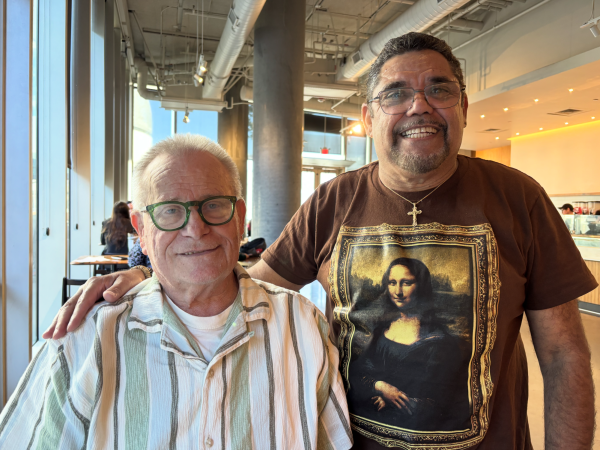
It was 42-year-old Leonides “Tito” Echevarria’s Hawaiian Pidgin accent that drew 52-year-old Rich Paschburg to him on May 10, 2003.
“He (goes), ‘Are you from Hawaiʻi?’ I go, ‘Yes, I am.’ And then that’s when we started meeting,” Echevarria said.
Raised in Kalihi, Oʻahu, Hawaiʻi, Echevarria grew up in the Fundamental Independent Baptist Church.
Echevarria moved to California in 1978 to attend Pacific Baptist Bible College – thinking it would “make the gay go away,” he married for 25 years and had two children.
“I did the thing. I got married, but it didn’t go away. It wasn’t going away,” Echevarria said.
Even though Echevarria left the church, he still believes in his faith.
Unlike Echevarria, who grappled with his sexuality and religious beliefs, Paschburg was in a committed queer relationship.
“I had a fellow, a partner. We didn’t have marriage back then, but I was with him (for) 20 years,” Paschburg said. “We moved out to (New) Jersey together, but I had met him in 1980.”
Though the couple had different experiences, it was during the 2003 BayLands FrontRunners event that their paths crossed.
The organization is an LGBT running and walking club founded in 1991, according to its website.
“Tito was walking ahead of me and I saw him as a guy walking alone,” Paschburg said. “(BayLands FrontRunners) set it up so … if you see somebody walking alone just go up to them and ask if you can walk together. So I just asked.”
In 2008, the couple got married three days before California Proposition 8 passed.
Prop 8 or Same-Sex Marriage Ban Initiative sought to define a marriage between a man and a woman, according to Ballotpedia.
“People like us that got married before Proposition 8 were grandfathered into that, the marriage was still considered valid and in effect,” Paschburg said.
Echevarria said their pastor said God was calling them to get married, that’s when Richard got on one knee and proposed.
Wanting to help people and be involved with the church again, the couple took to opening their own ministry.
“It’s a Baptist thing which says, ‘Everyone has a mission. What is yours? And how is it going?’ ” Echevarria said.
The couple opened their nonprofit, Compassion Ministry Silicon Valley, in 2012 which focuses on community work, according to its webpage.
Despite their marriage being legal and grandfathered in before Prop. 8, the couple longed to see same-sex marriage legalized.
It was in June 26, 2015 when the Supreme Court legalized same-sex marriage in all 50 states, according to a June 26 PBS article.
“People were still getting married from 2008 to 15, but it was not legal,” Echevarria said. “They had to get remarried, but now it’s legal.”
Marnie Singer and Brian Singer
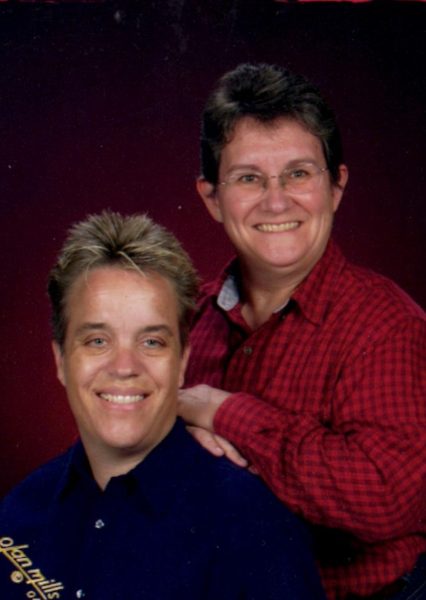
Brian and Marnie Singer have been together for over 20 years, taking a stand for their right to have a marriage license and overcoming challenges together.
The couple first met each other in 2000 at the Rainbow Women’s Chorus in San José, while Brian was looking to join the choir group.
“We had already started the rehearsal and then this person came in sort of leaning against the wall,” Marnie said. “And I thought, doesn’t that guy know that this is a women’s chorus?”
Rainbow Women’s Chorus is a women’s choir group that develops music in supportive and respectful atmospheres, according to the group’s webpage.
Brian grew up in Fort Worth, Texas, then came out as a lesbian at 18 years old. He was not familiar with certain gender identities until he attended San José State.
“I met my thesis advisor at (SJSU) and she introduced me to concepts like nonbinary and genderqueer,” Brian said. “I didn’t know all those things.”
At the time, Brian hadn’t socially or medically transitioned.
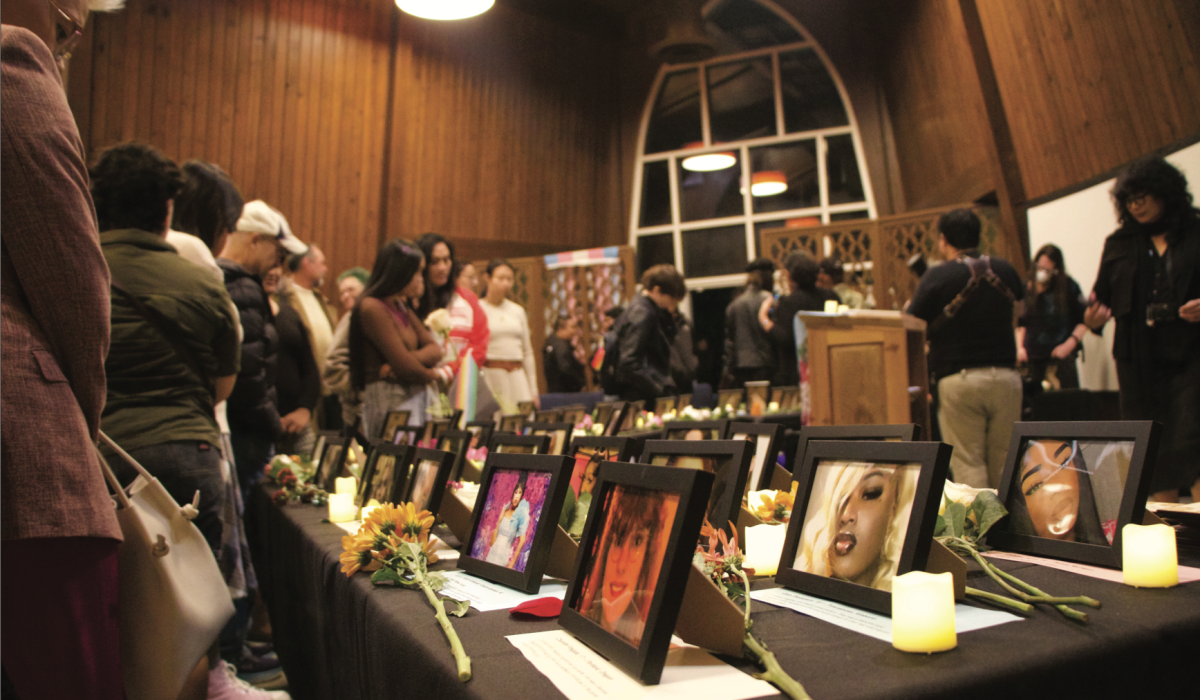
While in attendance at a Trans Day of Remembrance event, Brian spoke with a trans man and realized he could transition.
“I didn’t know I was transgender as a kid. I had no idea,” Brian said. “So I was 42 and I transitioned.”
He told Marnie that night he was thinking of starting testosterone.
“We had conversations, enough that I wasn’t terribly surprised … ” Marnie said. “I inhaled and took it in and I wanted to stay with you, if we’re going to do this together, then we need help just knowing the culture.”
The couple began therapy, talking about communication instead of gender. In February of 2005, Brian had his first testosterone injection.
Brian said the transition wasn’t hard on them but other people told him that Marnie would not stay with him because of his transition.
Before they were together, Marnie met her husband when she was in high school, had four children and moved to a seminary for her husband.
“Then things progressed and realized I did need to come out,” Marnie said.
Marnie came out as a lesbian-identified bisexual and separated from her husband in August 1993 with the support of her church.
She now identifies more closely with the label of queer since Brian transitioned.
After going on their first date, they had a non-legal marriage in June 2003.
Marnie said at the time in Palo Alto, they could file for domestic partnership instead of legal marriage.
“We had an appointment to get our license and the California Supreme Court stopped it the day before,” Marnie said. “The day before our appointment, they stopped it for a year.”
They protested for their marriage license at City Hall in San Francisco, despite knowing they would be turned down.
They were told by police to leave at the end of the day.
“We knew that marriage equality was going to come,” Brian said. “We knew that it was just a matter of time.”
Kathy Cordova and Sue Patrick
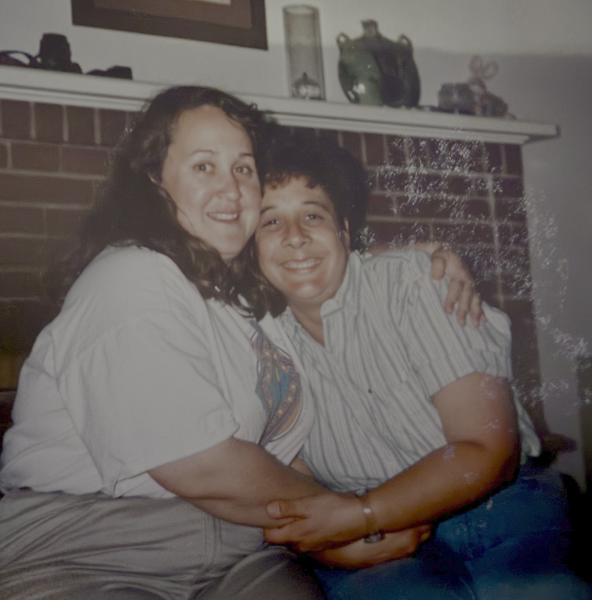
It was in 1988 that Kathy Cordova and Sue Patrick met each other through mutual friends.
“I had gotten out of a relationship that hadn’t gone well and had kind of a messy breakup,” Patrick said.
The friend asked if Patrick was interested in someone else, romantic or not.
“She said ‘If you’re going to get involved with somebody, you need to get involved with somebody like Kathy Cordova,’ ” Patrick said. “So then I kind of started looking at her and then that’s how we kind of got together after that.”
They have been together since 1989, for about 36 years.
Cordova said at the time they met, bars were one of the few places lesbians and gays could meet.
“There was very little representation of the lesbian (and) gay community on television or in movies,” Cordova said. “There were gay bars, so that was one of the places where we could socialize and it was less out in public.”
This led to the Stonewall Riots in 1969 when police raided and arrested bar patrons at the Stonewall Inn, according to a History Channel article.
After being together for five years, Patrick came out to their family in 1994 because the couple wanted to have a commitment ceremony.
“In those days we couldn’t officially get married, but the church we went to did what was called commitment ceremonies and I wanted to invite them (Patrick’s family),” Patrick said.
Patrick did not officially come out to her family that she was a lesbian at the time.
“I invited Kathy to all our family things and she was there for Christmas and Thanksgiving holidays and cooked and did everything,” Patrick said. “So I just decided to act as though they knew.”
It was in 2008 when the couple decided to get legally married.
While California had allowed them to legally marry, it was not considered legal under federal law.
“As it got closer and closer to the election, it became clear that California was going to let us down,” Patrick said. “So then we decided to quickly get married before the election.”
The couple got married two days before the election alongside their son Robert who was 7 years old when they got married.
“He was 7 at the time,” Patrick said. “And so at one point, he took one of the signs off of the little metal standard and put it on like a shirt and was wearing it around.”
Same-sex marriages are now treated as married for all federal tax purposes, including filing status, claiming property and taking standard deduction, according to the IRS.
“I wasn’t really sure if in our lifetime we would see a time when our marriage could be recognized across all 50 states,” Patrick said. “I remember being very excited when it happened.”