











Comprehensive, expansive and inclusive sex education is essential to the welfare and safety of queer youth in a heteronormative and discriminatory society.
Ideally, high-quality sex education should help navigate relationships, decision making, communication, consent, gender identity, sexual orientation, bodily functions, body image, birth control and sexually transmitted infections (STIs) and sexually transmitted diseases (STDs).
Sex education in the United States was initially pushed out of fear that the comfortable, white, middle class way of life would be threatened by slackening sexual morals, relying on racism, sexism, classism and eugenics to collimate supposed “solutions” to sex related problems.
Even now, some of the outdated narratives still fester.
Since the turn of the 20th century, sex education has worked as a reactive force to our changing culture.
Events like the social hygiene moment, the first World War, the sexual revolution, the acquired immunodeficiency syndrome (AIDS) epidemic, altered the views and installment of sex education, according to the Sexuality Information and Education Council of the U.S. webpage.
Comprehensive Sex Education and Abstinence-Only-Until-Marriage Sex Education are the two main forms of sex education currently present in the U.S., according to an Advocates for Youth webpage.
The debate and discourse surrounding both programs is ongoing, especially as the current U.S presidential administration seeks to standardize far-right beliefs.
Abstinence-Only-Until-Marriage education uses fear tactics to teach abstinence before marriage as the only morally correct option for teenagers, often censoring information or spreading misinformation about contraception, condoms, abortion, masturbation and sexual orientation while completely ignoring questioning LGBTQ+ youth, according to the same webpage.
It is utterly disappointing that the federal government spends up to $110 million per year on misleading and harmful Abstinence-Only-Until-Marriage programs that deny young people essential, lifesaving information about their own bodies, while comprehensive sex education is not currently funded by any federal programs, according to a Guttmacher fact sheet.
Abstinence-Only-Until-Marriage programs are proctored in 14 states and laws that stigmatize, exclude and cultivate hostility towards LGBTQ+ students are present in 19 states, according to the Sexuality Information and Education Council of the U.S. website.
Furthermore, 13 states have passed “Don’t Say Gay” legislation that restricts sexual orientation and gender identity from being discussed in a classroom setting, according to the same website.
Conversely, Comprehensive Sex Education offers medically accurate information about sexuality and reproductive health, including topics such as human development, relationships, interpersonal skills, sexual expression, sexual health, society and culture, according to an Advocates for Youth webpage.
Comprehensive sex education is a chance to cultivate compassion in a climate where sociopolitics are at boiling point and malice threatens unity.
Comprehensive sex education is shown to decrease homophobia and homophobic bullying, expand the understanding of gender norms, prevent intimate partner violence and child sex abuse, increase bystander intentions and behaviors and improve relationships, communication skills and media literacy, according to a review article by the Journal of Adolescent Health.
Programs addressing gender and power in relationships were five times more likely to be effective in reducing STIs and pregnancy rates than those that did not, according to the same article.
By using gender-neutral language, ensuring staff is culturally competent, partnering with community-based organizations, dispelling stereotypes and binary norms, using medically accurate data and relaying information that is relevant to all students, developing youth – especially queer youth – can lead healthier, safer and happier lives.
Informed, involved and inclusive sex education can transform lives, shaping the way developing youth choose to explore themselves and honor others through their own empowered autonomy.
Unfortunately, under the current President Donald J. Trump administration, open discussion of sex, gender and inclusion is at utmost risk.
In July, the Trump administration ended the 988 Suicide and Crisis Lifeline’s LGBTQ Youth Specialized program, which gave callers under the age 25 the life-saving option to speak with LGBTQ-trained counselors, according to a July 17 NBC News article.
This is especially concerning because LGBTQ+ teens are six times more likely to experience symptoms of depression and more than four times as likely to attempt suicide compared to heterosexual youth, according to an webpage by Mental Health America.
In August, the U.S. Department of Health and Human Services demanded that 46 states remove all references to “gender ideology” in their educational materials within 60 days, according to the department’s webpage.
This rhetoric completely devalues the queer experience and denies the existence of transgender and nonbinary people and arms conservatives with ammunition to perpetuate violence and oppression of LGBTQ+ individuals.
Much of my experience in sex education was a blur. I was maybe shown a condom or two, told to keep my parts to myself and was certainly not educated on anything beyond the binary.
Consequently, most of my knowledge was acquired through the internet or word of mouth.
Pornography, YouTube videos and crude words from prepubescent boys was my initial insight into my own sexual and gender identity.
Many, especially queer youth, undergo the same process of independently adopting information that could otherwise be harmful, inaccurate or too explicit due to the failures of their school’s sex education.
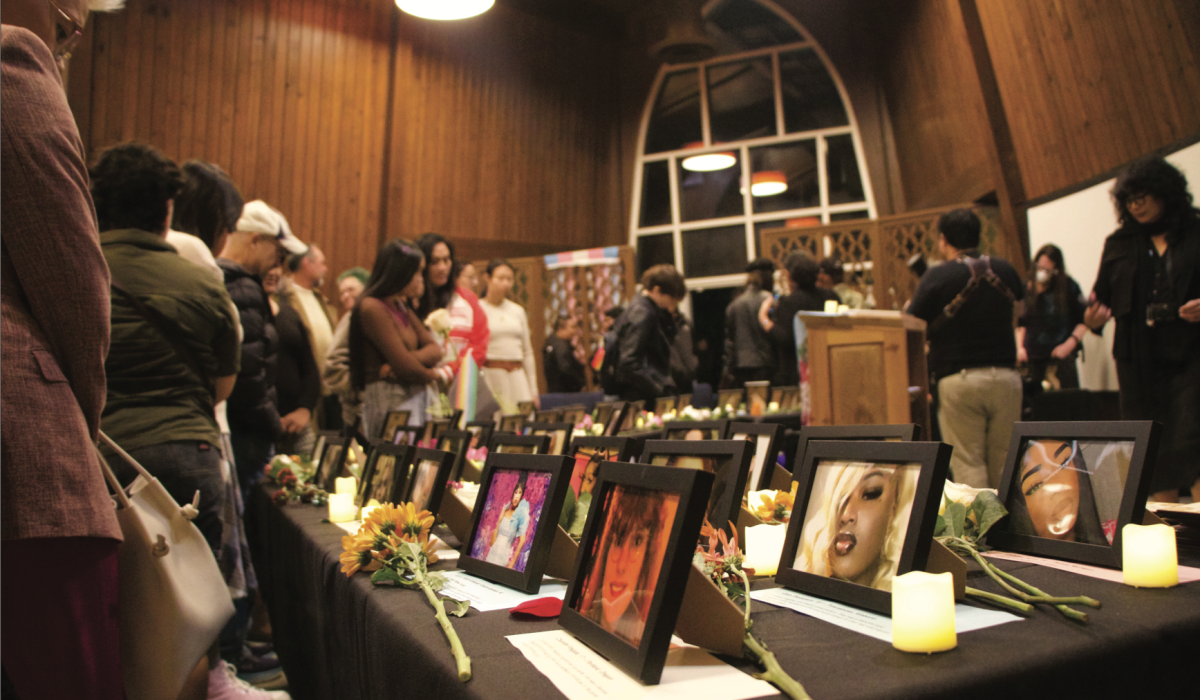
Dozens of people close to me have shared their struggles with sexual and gender identity, finding themselves alienated and ashamed in a society built for cis hetero people.
In 2024, 23% of LGBTQ+ youth reported they were physically threatened or harmed because of their sexual orientation or gender identity, according to a 2024 Trevor Project survey.
It’s alarming to hear such heavy sentiment in casual conversation and makes it all clear to me how our systems have failed to protect the LGBTQ+ community, but have worked to jeopardize and dishonor them.
The intense bullying, familial contempt, unwarranted harassment and violence, internalized shame, gender dysphoria and mental, emotional and physical struggle brings me immense rage and sadness.
Being raised hyper-religious and then growing to reject the blatant homophobia, transphobia and racism in the church, I see no place for conservative, religiously-motivated doctrine in our education system.
Our systems seek to divide us through mass misinformation and oppressive, targeted narratives that are established in our homes then internalized in our education, schools and workplaces.
Everyone deserves to understand their identity. Everyone reserves the right to be who they want, love who they desire and express their truth.
Queer youth deserve better, inclusive sex education as a part of that progress.