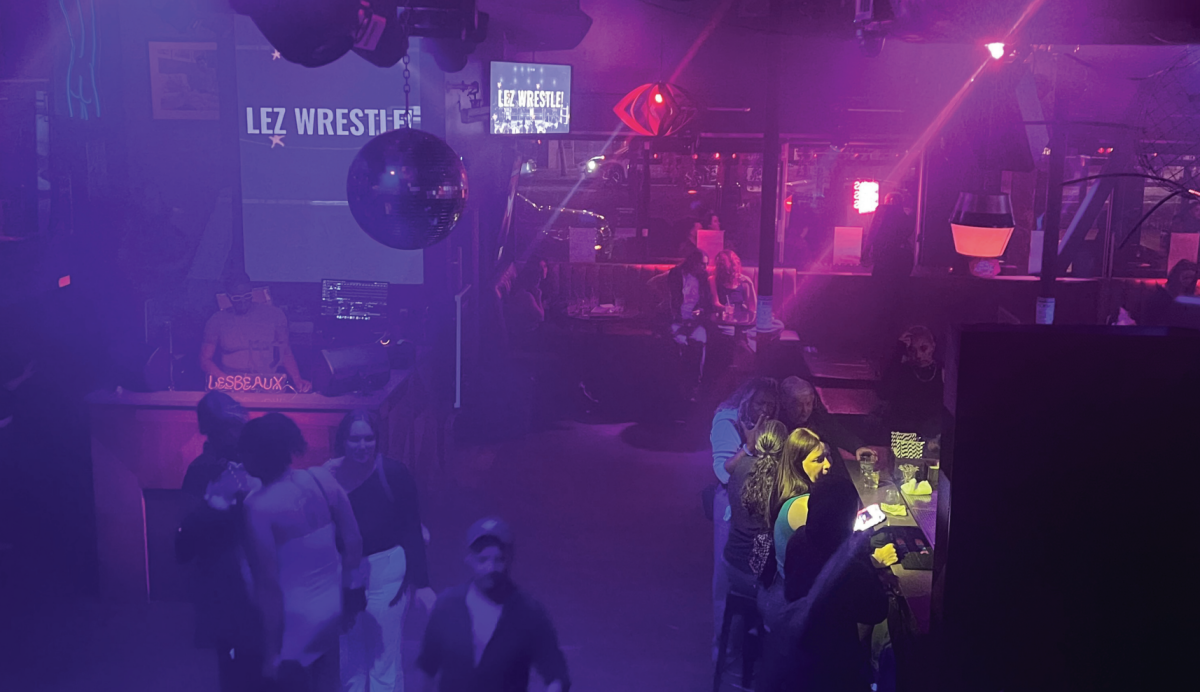
For decades, lesbian bars were more than places to grab a drink; they were pillars of sapphic and queer identity, a place where women and genderqueer people gathered freely and built community with each other.
Once a part of queer nightlife and activism, these spaces are disappearing nationwide, a trend that also reflects challenges seen in San José and the broader Bay Area.
The number of lesbian bars has continued to decline across the United States, with only 38 lesbian bars remaining, according to the Lesbian Bar Project webpage.
Lesbian bars were among the only public spaces where queer women could gather before the Stonewall riots, raids and harassment, according to a 2019 Columbia University study.
Wild Side West, located in San Francisco’s Bernal Heights neighborhood, is one of the few remaining lesbian bars open.
Imani Brown, a patron at Wild Side West, said that when visiting both lesbian and queer bars the bar stood out.
“I don’t always feel safe at straight bars,” Brown said. “I feel like there’s some bars I go to and men look at me and see my short hair and my masculine gender expression and they kinda give me a look like ‘What are you doing here?’ ”
Founded in 1962 in Oakland by partners Pat Ramseyer and Nancy White, it began as a space for queer women at a time when women weren’t legally allowed to bartend in California, according to a San Francisco Bay Times webpage.
It was later relocated to Bernal Heights in 1977, becoming a space for the city’s lesbian community and standing as one of the oldest operating queer bars in the Bay Area.
“This bar has been here for years and it’s really nice to make sure that we come here and spend money and be a part of the community,” Brown said.
She said that Wild Side West’s longevity gives them a strong sense of belonging and a comfortable, open space compared to other bars in San Francisco.
Annette Pakhchian, a therapist and San Francisco resident, said younger generations are drinking less and the community should invest in more sober, queer spaces.
“Something I’ve learned about the younger generation is that not many are drinking a lot,” Pakhchian said. “We need to invest in more queer spaces that are not alcohol-based, but a space where everyone can gather and connect.”
About 62% of adults under 35 drink alcohol in 2021-2023, down from roughly 72% two decades ago, reflecting a clear sign that Gen Z is drinking less than the older generation, according to a Jan. 1 article from TIME Magazine.
Despite the overall decline in alcohol consumption among Gen Z, studies show that about 20% to 30% of LGBTQ+ individuals struggle with substance use, compared to about 9% of the population, according to the Addiction Center.
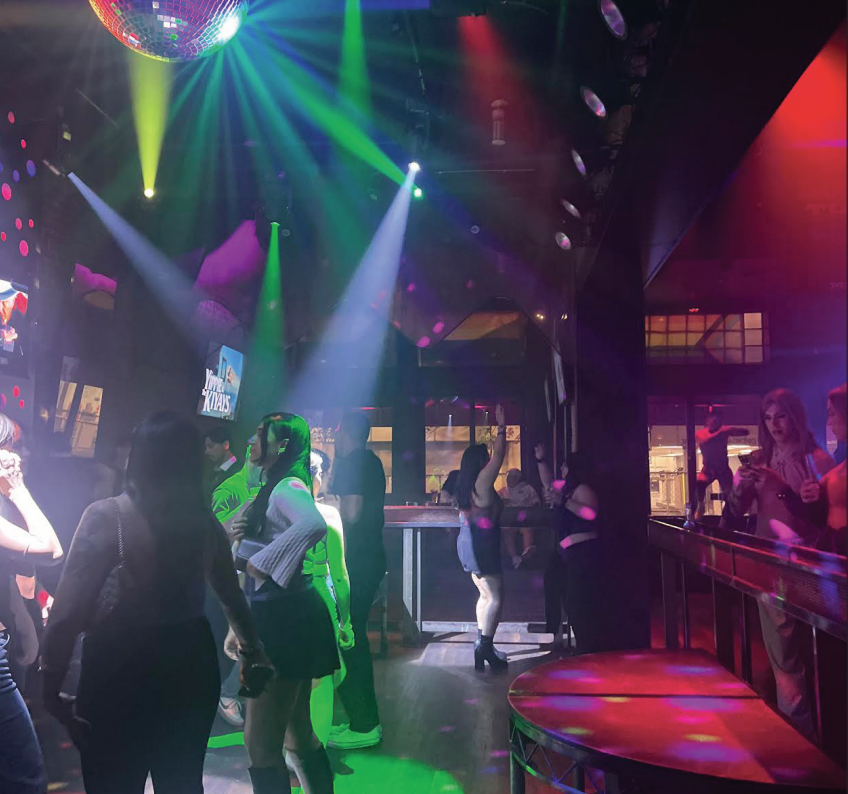
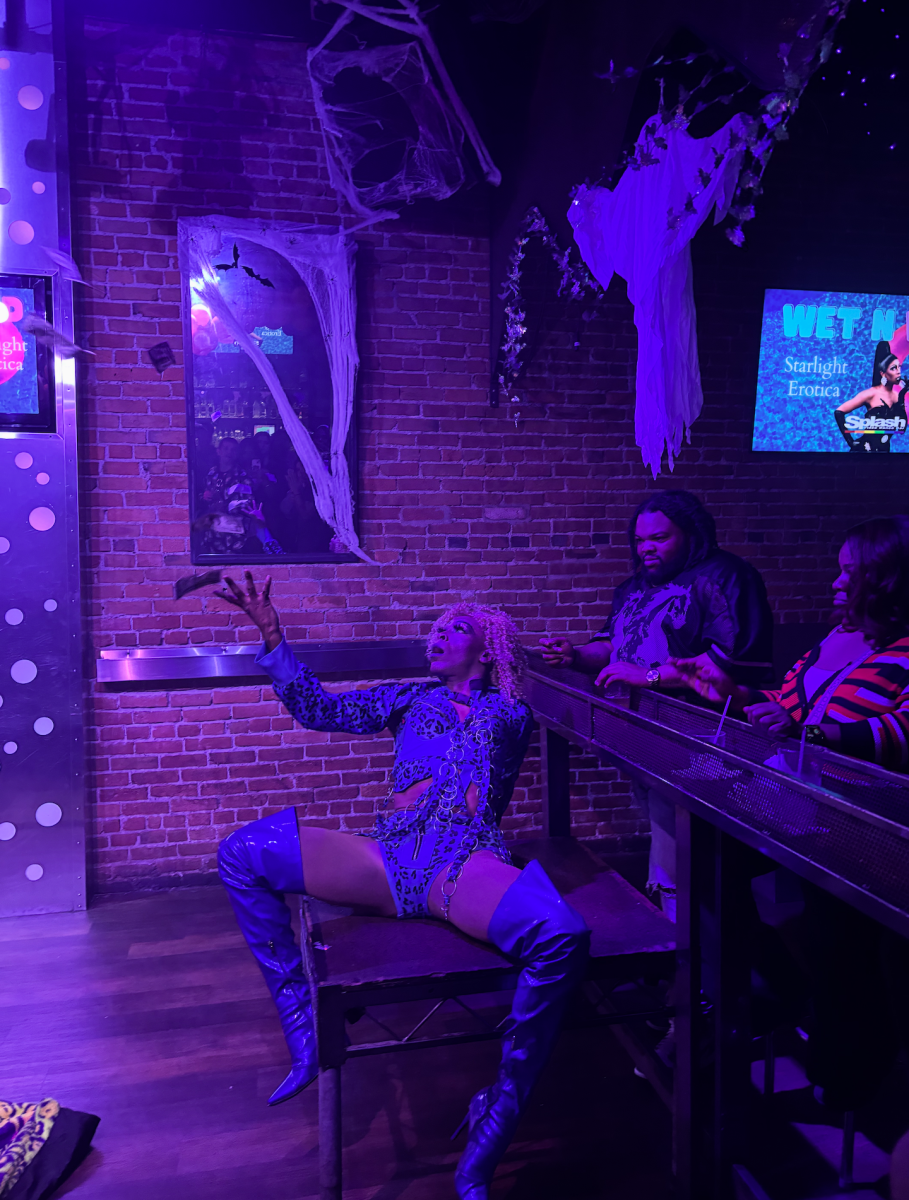
Jacqueline Correa, a tattoo artist and bartender for three years at Splash Bar San José, said that the closures of lesbian bars have affected her.
Splash hosts drag performances, dance nights and themed events, serving as a place for the city’s LGBTQ+ community, according to a Visit San José webpage.
“A friend of mine has said that San José, for being one of the biggest cities, has the least amount of gay people per capita, compared to San Francisco and L.A.,” Correa said. “We have a ladies’ night held every third Saturday of the month and if it gets busy, we’re lucky.”
San José’s LGBTQ+ community has an average population of 6% and about 0.26 gay bars per capita, the same as the San Francisco metro area, but with 0.63 gay bars per capita, according to a 2023 study by Clever.
Correa said this is a reality for many sapphic spaces in San José, where lesbian-focused night events are rare to gain attention compared to events that center on men.
“The ladies night is not something people come out to often, versus to where we have a ‘Man Candy’ night or literally any male-derived kind of night, it gets really crazy,” Correa said
Hey Girl! is a Silicon Valley PRIDE subcommittee that organizes women and femme-identified queer events, according to its Instagram page.
With fewer lesbian bars open in the country, Brown said she will continue to take the time and effort to support the locations remaining.
“When more women’s bars opened up, I made a point of making sure to patronize those venues because I want them to stay open,” Brown said.
Beyond social exclusion, financial inequality based on gender plays a role in why lesbian bars have a higher closure rate than gay bars, according to a Dec. 7, 2022, LGBT History article by Autostraddle.
Moreover, households led by the LGBTQ+ women earn about 52% less income than non-LGBTQ+ households would earn creating just under $40,000 loss annually, according to a 2024 community survey from the Center for American Progress.
Jenny Kline, a history teacher at Independence High School, moved to Bernal Heights in San Francisco 15 years ago and has seen some changes after going to Jolene’s and Mother for the last five years.
“There’s not a whole lot here, but there are some big queer events in the city where it gets busy, but on some weekends it would be nuts to a point where we would choose not to come,” Kline said. “There would be groups of people coming in, but then 30 minutes later it dies down.”
For longtime patrons, Kline and her partner said the bars they have visited offer more than drinks.
“It’s nice to live in the neighborhood and see people we know here when we come in,” Kline said. “We’ve got our friends that we meet regularly and we’re even friends with the bartenders, so it’s nice to be connected.”
As lesbian bars continue to disappear across the country, patrons of the remaining bars in the Bay Area remain essential for the community.
Several bar owners across the country described their spaces as a “think tank,” creating a safe space and places that serve much more than four walls, according to a June 10 2021 PBS article.
Despite the challenges of gentrification, rising costs and shifting social habits, the Bay Area’s last lesbian-centered spaces continue to remain as important centers of identity and belonging for the community.
“It’s one of the few places left where you can just come, sit down and know that you belong,” Correa said.