












San José State is home to several dance organizations, including Sparchata, Spartan Mambo and Grupo Folklórico Luna y Sol, which showcase Latin American culture through movement and music.
Sparchata and Spartan Mambo
SJSU’s Spartan Mambo and Sparchata are sister teams that present Latine culture through performance and dance.
Spartan Mambo is the university’s salsa team, led by director and co-founder Takeshi Young, according to a Salsa Vida webpage.
Salsa originated in Cuba and was further developed in New York’s immigrant communities, according to a May 28, 2024 Contra Tiempo article.
The dance gained popularity among Puerto Rican migrants in the 1960s and 1970s as it represented a new identity of Latin American culture in the United States, according to an Oct. 14, 2022 article by the History Channel.
Young said he founded the team alongside roommate Max Shpungin in 2010 while pursuing his bachelor’s degree at SJSU.
“It’s been a fun journey, every semester we learn and get a bit better,” Young said.
Spartan Mambo has won several awards including the 2023 and 2025 Collegiate Weekender championships in Los Angeles, according to a Salsa Vida webpage.
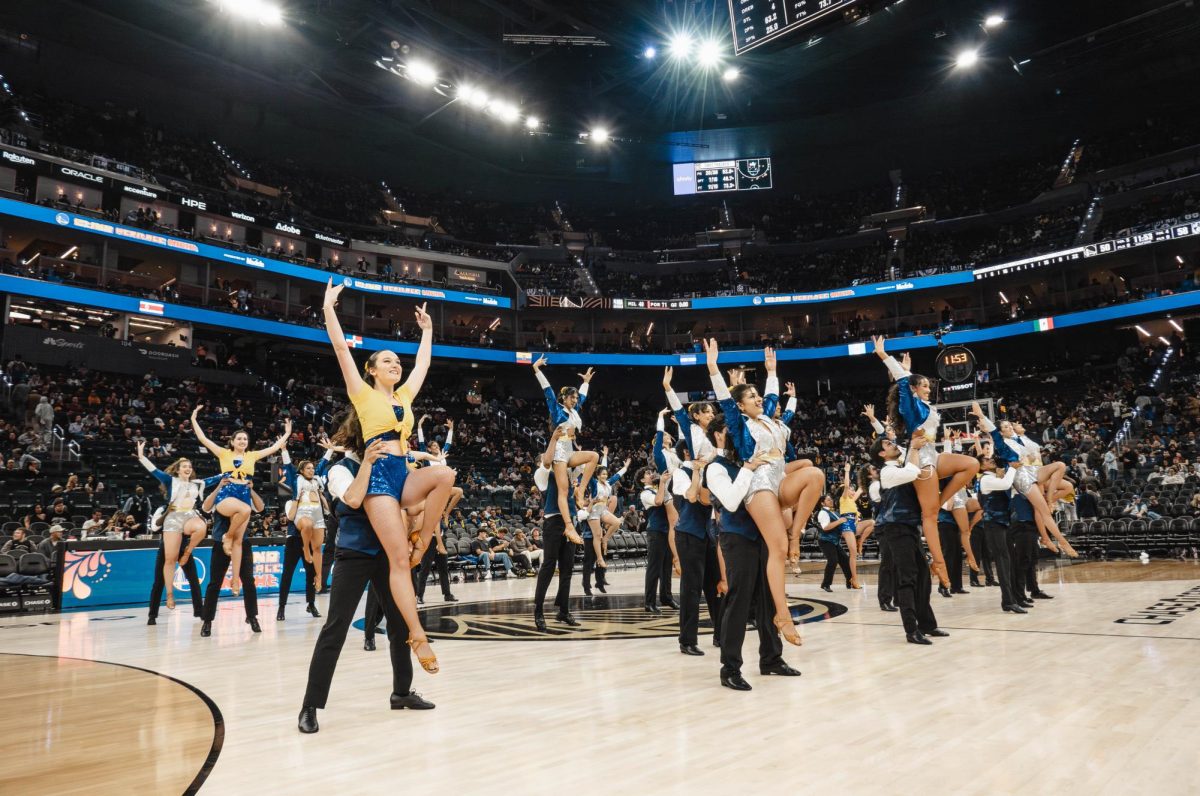
Spartan Mambo performed during the Golden State Warriors’ halftime show on Latino Heritage Night on March 25.
“(The Warriors) reached out to me, we’ve worked with the Warriors before in the past, we’ve done two other halftime shows,” Young said.
The routine performed comes from a previous semester and was modernized for a more general audience, according to a March 6 Instagram post by the team.
Although Spartan Mambo was the team invited to perform, Sparchata dancers were also offered an opportunity to join Spartan Mambo as part of the performance.
Ngoc Huynh is the current coach leading Sparchata, the university’s bachata team.
Bachata originated in the Dominican Republic during the mid-20th century and is one of the most popular social dances globally, according to an Axcent Dance webpage.
Both salsa and bachata are considered partner dances with different step patterns. However, the dances have distinct differences.
Salsa is faster paced and danced in a forward-backward motion, while bachata is more sensual and danced in a side-to-side motion. The dances are also performed to different kinds of music, according to a Salsa Vida webpage.
Ashley Chavez, a fourth-year sociology student and captain of Sparchata, said she has experience with both teams. She was previously Spartan Mambo’s vice president and event planner.
Chavez said the Warriors’ halftime performance brought both groups together after being separated because of differing practice times.
“In the past few weeks, (Sparchata) has been attending Spartan Mambo’s practices, so we all practice together in one big group,” Chavez said.
Young said that in his 16 years of overseeing Spartan Mambo, he’s witnessed how students connect while dancing.
“There are people that have met on the team and got married and had kids … that’s been meaningful in terms of the impact the team is able to have outside of performing and dancing,” Young said.
Both groups hold auditions and workshops at the start of the fall and spring semesters.
Meeting details are posted on the dance groups’ Instagram pages, and students can join with no prior salsa or bachata experience.
Chavez said she has gained her confidence through Sparchata.
“I’m not as timid anymore … Now, when I walk into a room, and there’s music, I’m not scared to be the first one on the dance floor, and I’m typically the last one off the dance floor,” Chavez said.
Grupo Folklórico Luna y Sol
In the evenings, students walking by the Spartan Complex might hear the rhythmic rumble of SJSU’s Grupo Folklórico Luna y Sol dancers fast tapping their heels onto wooden floors into the night as they practice.
Grupo Folklórico Luna y Sol teaches students the traditional dances from Mexican states and performs throughout the semester, according to the dance group’s website.
Folklórico is a traditional dance that mixes elements of classical ballet and Mexican regional folk while the dances celebrate regional cultures and stories, according to a research article published by the University of Iowa in November 2021.
Jose Ramirez Zambrano, a fourth-year business management and information student and president of Grupo Folklórico, said watching or performing folklórico is a great way to learn about Mexican culture and history.
“A lot of things and praises in our daily life that come from Mexican culture can be explained through these dances,” Ramirez Zambrano said.
Folklórico dancers are often dressed in brightly colored attire and wear heeled shoes to capture a distinctive tapping sound called zapateados, according to a Vancouver Ballet Folklórico webpage.
Zapateados allow the dancers to create a beat with their movement; some steps represent a distinct region, according to the same source.
The current artistic director, alumna Monika Angeles, said she has danced with the group since her time as an undergrad in the 2010s.
Before joining and directing the folklórico group, Angeles said she has had several years of experience with folklórico.
“As soon as I started, it felt like home,” Angeles said.
After becoming the artistic director in 2021, she said directing over 80 students of varying experience is a challenge.
“I had imposter syndrome when I first started because it was a big task,” Angeles said. “It’s changed me to be easier on myself and not as hard of a critic and be softer with knowing what my limits are, but also, it’s changed me in a way that I’m proud of all of the work that I’ve done.”
Angeles said that folklórico representation at SJSU is important to her.
“I want to make sure this group maintains a positive reflection of higher education for Latino and Hispanic students,” Angeles said.
Being from Michoacán, Ramirez Zambrano said performing the “Danza de los Viejitos” or “Dance of the Little Old Men” is one of his favorite memories with the group.
The “Danza de los Viejitos” is a performance to celebrate life and honor elders of Michoacán, according to a Manini blog post.
Performers of the dance will wear masks depicting elders while wearing traditional clothing of a serape or cloak, often with designs or colors, according to a Sept. 2, 2019 post by Julisa’s Cultural Blog.
The dance typically involves performers beginning the dance by walking slowly on to stage, hunched over a cane, gradually being rejuvenated by the music, according to a May 16, 2023 Manini blog post.
“That one is very special to me,” Ramirez Zambrano said.
Indigenous culture is kept alive through folklórico as during the colonial period of Mexico, folklórico became an act of rebellion against the Spanish and an act of cultural expression, according to a CSU Fullerton study published in May 2025.
The group can be hired for event performances and all proceeds are reinvested into the group for workshops, scholarships and costuming, according to the dance group’s website.
Grupo Folklórico Luna y Sol also has an annual showcase called Noche Folklórica, which is an evening of performances at the Hammer Theatre, according to the group’s Instagram post.
Angeles said that in the future she hopes to perform more on campus and collaborate with other clubs and organizations.
“I hope we get more recognition on campus for all the dedication and hard work we put in,” Angeles said. “Especially in such a high populated Hispanic community.”