















Local LGBTQ+ organizations in San José are stepping up to provide resources by addressing the need for accessible community support.
Through expanding outreach and partnering with leaders, LGBTQ+ organizations are ensuring support remains available to groups who need it.
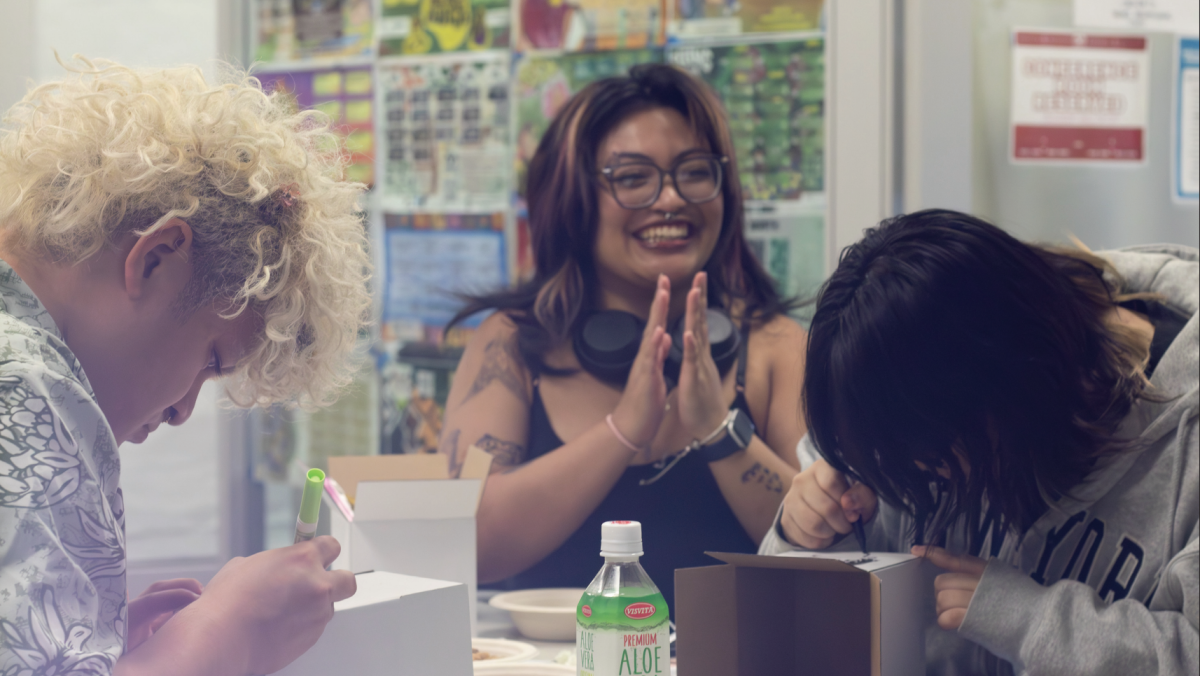
Hale, a fourth-year psychology student who chose not to share their last name for safety reasons, interns for the San José State PRIDE Center.
The PRIDE Center promotes LGBTQ+ inclusion and support while also improving campus climate through educational outreach, according to SJSU’s PRIDE Center webpage.
“Just like how every center here is based on an identity, we focus on the queer community,” Hale said. “We specifically call out to other queer students to meet other queer folks here.”
Studies have found that LGBTQ+ student groups have a positive role in student lives and personal relationships, according to an American Sociological Association journal.
Hale said LGBTQ+ students are able to connect with other students in the same community at the center.
“It’s a space (where) you could come hang out – we have a library of queer books that people can borrow and check out, we have board games for game night, we have a TV with multiple games and consoles,” Hale said.
With many of these resources available, research shows that higher education institutions that promote mental health to students help enhance academic persistence, according to a Cambridge Prisms study.
Bipasha Chatterjee, a third-year political science student, visits the PRIDE Center frequently and uses the resources available.
“It definitely has a lot of great harm reduction supplies,” Chatterjee said. “I know that (the supplies) will be there when I need it.”
A national survey on drug use and health found that 22% of sexual minority adults have an alcohol consumption disorder compared to 11% of the overall population, according to the Bee The Vibe.
Chatterjee said there are sanitary items available along with fentanyl test strips and NARCAN Nasal Spray.
“It makes being a student here easier because you can get everything in one spot,” Chatterjee said.
A study found that LGBTQ+ folks are more likely to encounter challenges to care compared to straight-identifying individuals, according to the American Public Health Association.
One of the challenges LGBTQ+ people face is access to affordable health care.
Research shows that LGBTQ+ adults encounter higher rates of unfair treatment compared to non-LGBTQ+ adults in healthcare settings but also in their daily lives, according to a 2024 poll finding on KFF.
Sera Fernando, manager and leader of the County of Santa Clara Office of LGBTQ Affairs, works with the county to address necessities and challenges faced by local LGBTQ+ communities.
“We work collaboratively with a lot of community-based organizations to see what we could do to help support or create safe spaces,” Fernando said.
Dedicated to further strengthening LGBTQ+ communities in the county, the Office of LGBTQ Affairs aims to provide support through integrated approaches, according to the county’s website.
Fernando said the office works to give leaders and organizers research on what kind of resources are needed by the community.
“The Office of LGBTQ Affairs is a policy initiative, outreach and technical systems kind of office,” Fernando said.
She said the office does a majority of outreach to gain information about the assistance the community needs.
The LGBTQ+ Listening Forums allow the county to gather informed insights on experiences and priorities of some of the members across Santa Clara County, according to the Division of Equity and Social Justice webpage.
“It helps advise what community leaders and stakeholders need to do to create safe and affirming spaces for LGBTQ people,” Fernando said.
Adrienne Keel, Director of LGBTQ programs for The LGBTQ Youth Space, advocates the use of safe spaces because it offers an environment where young people can build community.
The LGBTQ Youth Space offers an engaging and safe environment for LGBTQ+ youth, according to the space’s website.
“We do a lot of outreach and education, going out to the community, letting folks know we exist,” Keel said.
The youth space began in the small room at the Billy DeFrank LGBTQ+ Community Center and continues to offer a space for LGBTQ+ youth.
“We participate in a lot of community resources fairs – we have a speakers bureau which is comprised of volunteers who go out and speak on panels and on their stories,” Keel said.
Keel said the youth space offers therapy services to people who receive Medi-Cal at no cost. Medi-Cal is an insurance provider that offers mental and behavioral services, hormone therapy and other medical procedures, according to a June 2025 services page.
“It seems like there’s this rhetoric around youth being forced to have medical intervention and really it’s a matter of letting a young person determine who they are,” Keel said.
The counseling service is tailored for LGBTQ+ youth who are in the process of coming out, transitioning or just want to talk, according to The LGBTQ Youth Space webpage.
“We hire people who reflect the community we serve – our employees belong to trans, nonbinary and gender expansive communities,” Keel said.
The program is committed to offering a space where identities of members of the LGBTQ+ community can be represented, but also shared.
“We are not here to tell anyone how they identify wherever they are with their journey – attraction or gender identity – they could just come and exist,” Keel said.