










On March 6, the Board of Trustees of the California State University filed an administrative procedure act case lawsuit against the U.S. Department of Education and the Secretary of Education Linda McMahon for its findings in a Title IX directed investigation and proposed resolution toward San José State.
The Administrative Procedure Act is a federal act that rules the procedures of the administrative law, establishing how federal administrative agencies make regulations, according to a Cornell Law School Legal Information Institute webpage.
The U.S. Department of Education’s Office claimed SJSU violated Title IX by allowing a transgender athlete to compete in women’s volleyball, according to a Jan. 28 news release.
In the complaint, the plaintiffs claimed that San José State will lose millions in federal funding if the university does not comply with the federal government.
Secretary McMahon gave the university a notice of impasse and a 10-day deadline of March 11 for failing to negotiate a resolution, risking possible enforcement action.
On March 24, the university faced another 10-day deadline and possible referral to the Department of Justice and termination of federal funding, according to a March 26 Spartan Daily article.
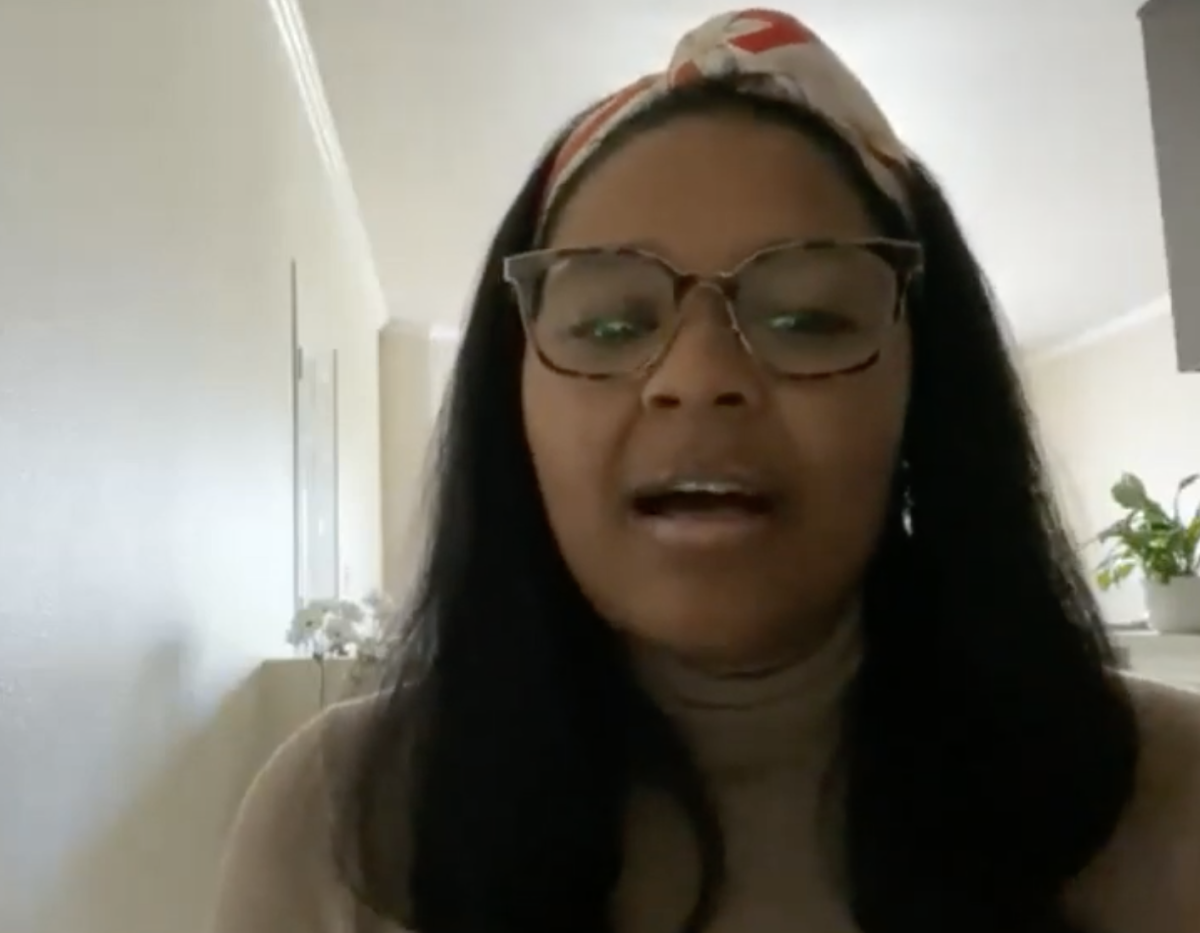
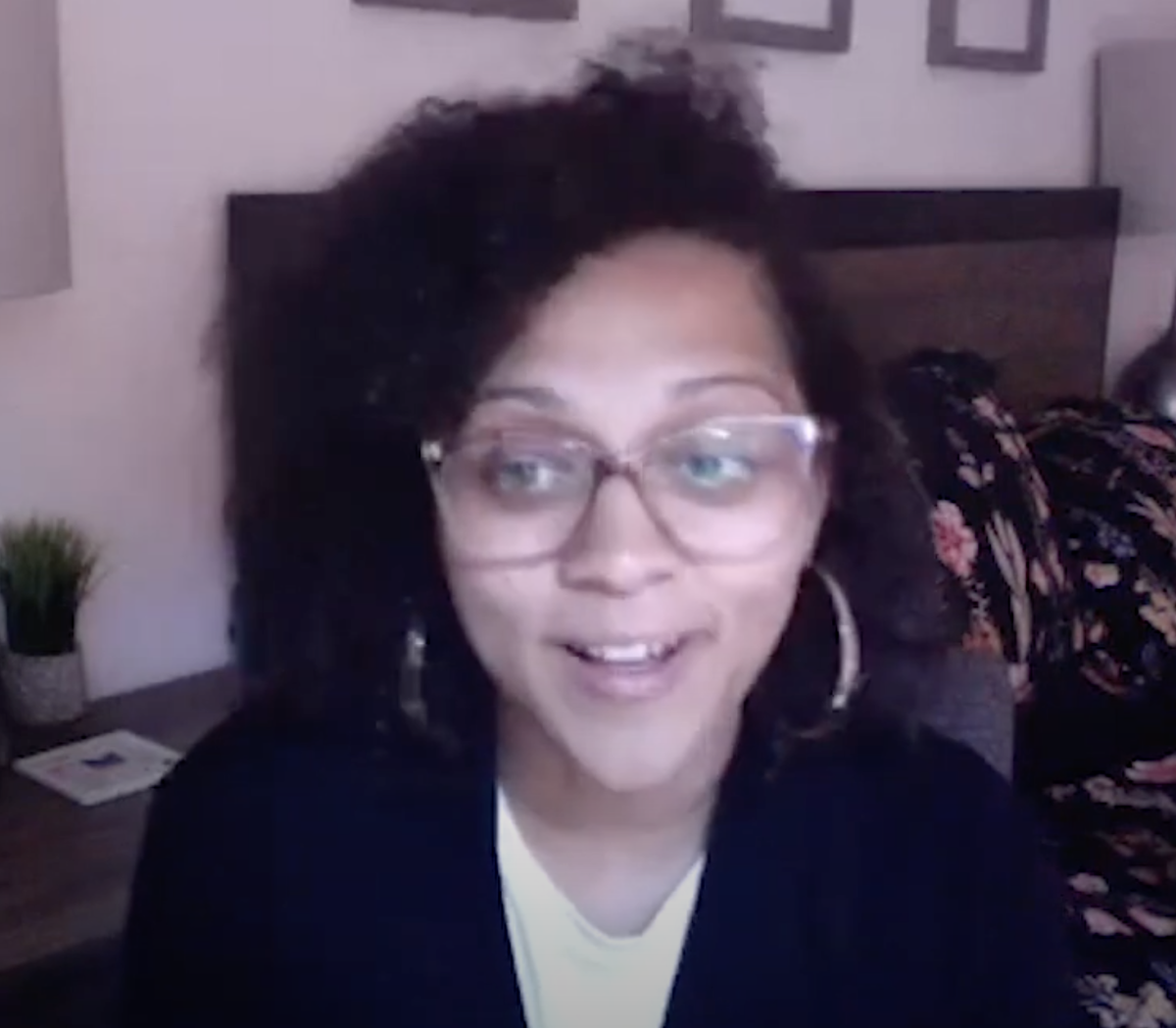
Tammie Visintainer, associate professor of teacher education at SJSU, said that the university is taking the strongest position it can in comparison to other Ivy League universities.
Visintainer was directly attacked and threatened by Senator Ted Cruz for her work helping underrepresented students with community science and her NSF grants were canceled last year.
“ This one grant I had was a solo grant, my NSF career grant, which is my dream project. So it was really hard for that to be dismantled in such a horrible way,” Visintainer said.
In early March, a few days before the lawsuit was filed, she attended the TransTalk town hall meeting where queer and trans students and faculty called for transparency in regards to the Title IX investigation findings.
“ I also find it important just to be who I am. I speak about my two kids,” Visintainer. “I speak about my wife and my family and I just try to advocate and be authentically myself in my courses and I think that also opens up people, any kind of queer perspective, to feel like they can also be themselves.”
President Cynthia Teniente-Matson was scheduled to attend the meeting but cancelled her appearance three hours before the town hall because of an unexpected scheduling conflict.
“This is before the email came out right and I was like, ‘I have faith in her (President Cynthia Teniente-Matson), I really do (think) that she’s gonna do the right thing,’ ” Visintainer said. “And then when she did, I was like, ‘Oh my God, I was right. Thank God.’ ”
Bonnie Sugiyama, director of the SJSU PRIDE Center and Gender Equity Center, said that supporting students in their role has been a rollercoaster within the context of the Title IX investigation and CSU lawsuit.
“ What we now know is that the administration couldn’t say anything during that time and that was difficult for the students in trying to support them through that,” Sugiyama said.
Sugiyama said that activism and advocacy has changed over the years from their perspective. They said it is nuanced and legal battles are now becoming more prominent.
The CSU lawsuit was filed on March 6 and President Teniente-Matson released a statement affirming the university and CSU’s position, a week after the town hall meeting
“It brought tears to my eyes honestly,” Visintainer said. “I thought it was really powerful. She was like ‘this is not based in fact, we are not going to adhere to these fabricated demands and also we’re suing.’ ”
Following the second deadline, the California State University filed a joint stipulation and order preventing any termination of federal funding from SJSU before judicial review of the lawsuit, according to the same source.
The claim of the university violating Title IX tells SJSU to agree to a resolution agreement that would require the university to take actions such as publicly stating, “the sex of a human – male or female – is unchangeable.”
The CSU system and SJSU disagreed with the Office for Civil Rights’ conclusion and findings, refusing to comply with the proposed resolution agreement, according to the CSU Office for Civil Rights Response and Lawsuit FAQ webpage.
The lawsuit was filed against the Office for Civil Rights to challenge the findings and protect the system from being retroactively punished, according to the same webpage.
Letter of Findings from the U.S. Department of Education
On Jan. 28, 2026, the United States Department of Education Office for Civil Rights issued a Letter of Findings, which concluded that the university violated federal law by allowing a transgender athlete to compete on its women’s volleyball team.
Under Title IX, the office can initiate a suspension or termination of federal funding to noncompliant institutions, or refer the case to the U.S. Department of Justice for potential lawsuits, according to the U.S. Department of Education.
The underlying events began during the 2022-2024 National Collegiate Athletic Association (NCAA) volleyball seasons, when Student 1, described in the findings as a transgender woman, participated on the SJSU women’s indoor volleyball team, according to the Letter of Findings.
The Spartan Daily is not identifying Student 1 because she has not been named in the lawsuit.
Page three of the letter reads, “San José State allows males to participate in women’s sports and to use women’s locker rooms and bathrooms … Thus, the University is in clear violation of Title IX.”
Student 1 began in April 2022 under the women’s indoor volleyball head coach at the time (Coach 1). At the end of the 2022 season, Head Coach Todd Kress and Associate Head Coach Melissa Batie-Smoose joined the team.
In the lawsuit, no players on the women’s volleyball team are named and only two coaches – Head Coach Todd Kress and Associate Head Coach Melissa Batie-Smoose – are named.
Coach 1, who recruited Student 1, left the university after completing the 2022 season to coach at another institution.
According to Batie-Smoose, Kress instructed her not to disclose Student 1’s transgender status to anyone associated with or outside the team. Batie-Smoose further alleged that Kress stated, “anyone who disagrees with [Student 1] being on the women’s volleyball team needs to get therapy and needs to leave SJSU.”
During the 2023 women’s indoor volleyball season, Student 1 played in 17 matches across 62 sets, while during the 2024 season, Student 1 played in 21 matches across 81 sets.
In the 2024 season, five opposing teams – Southern Utah University, Boise State University, the University of Wyoming, Utah State University and the University of Nevada, Reno elected to forfeit scheduled matches against SJSU.
Boise State and the University of Wyoming chose to accept the forfeits because of, “unfair advantage and dangers caused by the male player, Student 1.”
Student 2, a player on the women’s indoor volleyball team, was informed she would not retain her scholarship during the 2023 season because of an injury. Student 1, who was also injured and reportedly missed more of the season than Student 2, was permitted by Kress to retain their scholarship, raising allegations of preferential treatment.
The Office for Civil Rights asserted that SJSU failed to provide sufficient documentation and witness information related to these allegations, and that the materials produced had been redacted.
Page 20 of the findings states that “the uncontroverted evidence” indicates Student 1 is male and that Student 1’s participation had a “significant and unjustified negative impact” on the opportunities of female athletes, both within SJSU and among competing teams.
On Sept. 23, 2024, Student 3, the roommate of Student 1 and a player on the women’s indoor volleyball team at the time, joined a lawsuit against the NCAA challenging its policies permitting transgender athletes to compete in women’s sports.
At the time, NCAA policy allowed transgender athletes to compete in accordance with sport-specific guidelines, often tied to testosterone levels and national governing body rules.
However, in 2025, the NCAA revised its framework to align more closely with federal directives, including those outlined in recent executive orders.
These policy changes became central to the Office for Civil Right’s legal reasoning as they evaluated SJSU’s past actions under changing regulations.
Student 3 claimed that she was not aware of Student 1’s transgender status until near the end of the 2023 season.
On Sept. 24, 2024, SJSU received a Title IX and Equal Protection complaint from the Independent Council on Women’s Sports (ICONS), based on that same policy.
ICONS is an advocacy group helping women strive against transgender participation in sports and preserving what it defines as fairness in female athletics, according to its official website.
The ICONS letter states, “[Student 3] describes terrorizing practices and games in which a man is smashing volleyballs into the faces and bodies of young women at speeds of over 80 mph and making a mockery of fair competition.”
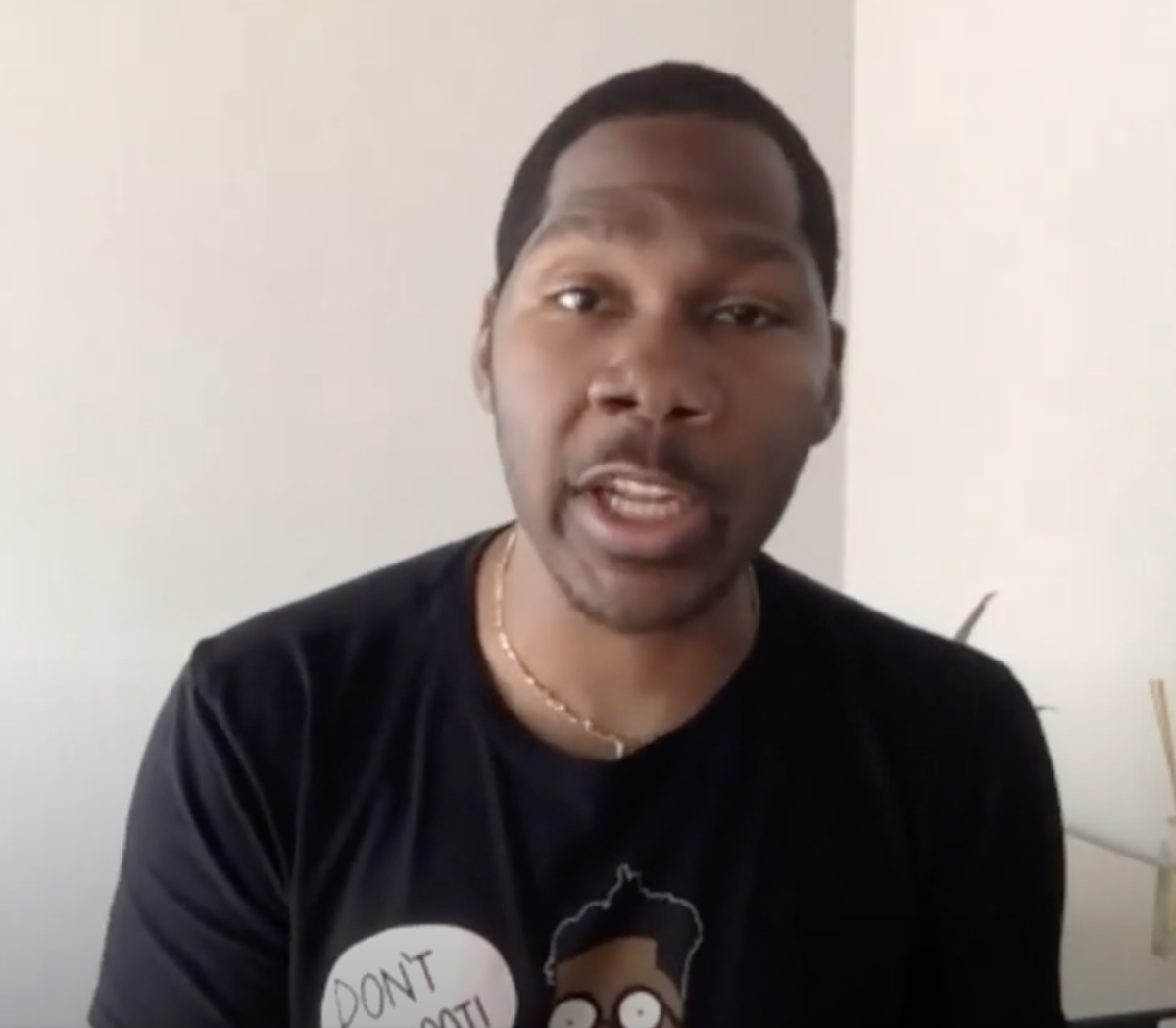
Kim Jones, co-founder of ICONS, said as soon as the organization became a place for people to call, they started receiving phone calls about Student 1.
“ We received quite a few phone calls and concerns of families and players that had to compete against him (her, Student 1) as far back as high school,” Jones said. “So there were women who had been upset about having to compete against him (her, Student 1) in high school, having witnessed this, saying ‘we didn’t know how to stand up for this.’”
ICONS, Independent Council on Women’s Sports, is a network and advocacy group aiming to protect and promote women’s sports and prevent sex-based discrimination, according to its website.
Jones’ daughter and son competed against Lia Thomas, who was the first transgender athlete to win a NCAA Division I national championship and a swimmer at the University of Pennsylvania (UPenn).
Through this experience, she said she had the wool ripped off her eyes and felt that there was no language to differentiate between Thomas and anyone born female.
“ Watching sports become a tool to disempower women and tell them to step aside because a man’s feelings were more important than their own was a shocking twist on what sports should be for women and instead became a tool to tell them that they were a joke and less important than men,” Jones said.
UPenn was one of the three institutions including SJSU that the Trump administration performed a directed investigation into for allowing trans women to compete in their athletics programs.
The university agreed to the resolution agreement proposed in July 2025 after the findings revealed that UPenn violated Title IX.
On Oct. 29, 2024, Batie-Smoose filed an official complaint alleging that Student 1’s participation violated Title IX and called for a comprehensive investigation.
The complaint also claimed Kress retaliated against Student 3 for her involvement in the lawsuit.
Additionally, parents of another player submitted a letter to the university asserting that Kress demonstrated favoritism toward Student 1.
Page 25 of the findings reads, “The women on the team were told they needed to be careful of what they said because they all signed a contract and could lose their scholarships. That threat made several members of the team afraid to speak out.”
On Oct. 23, 2024, Student 3 posted a video titled “THE MAN HAS MOVED OUTTTTTT” referring to Student 1 as male and expressing relief that Student 1 was leaving the dorm.
The video was forwarded by Kress to the Senior Associate Athletics Director for Student-Athlete Wellness and Leadership Development, who filed a Title IX complaint against Student 3 for misgendering Student 1.
On Oct. 2, 2024, the SJSU women’s indoor volleyball team stayed in Fort Collins, Colorado, to compete in a match with Colorado State University the next day.
During the trip, three SJSU players, including Student 1, allegedly snuck out of their hotel and met with a player from the opposing team.
The findings state that Student 1 discussed plans to manipulate gameplay in a manner that would disadvantage Student 3.
“The University chose to close the inquiry and took no action whatsoever against Student 1. Title IX required it to do a whole lot more,” the findings stated.
Student 3 also described experiencing unusually forceful play from Student 1 compared to prior competition.
“It is uncontroverted that: … SJSU knowingly recruited a male student athlete (Student 1) to join the San José State University women’s indoor volleyball team with the intent of gaining a competitive advantage over other teams,” page 35 of the findings reads.
March 6 CSU Board of Trustees Lawsuit
On March 6, the CSU Board of Trustees sued the federal government in response to being targeted for abiding by interpretations of Title IX law that existed in previous presidential administrations, according to the lawsuit.
“The Department is attempting to punish San José State University (“SJSU”) for supposedly violating Title IX from 2022 to 2024, but there is no question that SJSU’s conduct was required by Ninth Circuit law and the federal government’s own guidance at the time,” the lawsuit read.
The United States Courts for the Ninth Circuit includes the state of California and western states, according to a government webpage.
Robert Marx, an associate professor of child and adolescent development at SJSU and director of the Queer Hope Institute, said they went to games during the volleyball season to support the team and students.
Marx is in their seventh year of teaching at SJSU and said they started the Queer Hope Institute over a year ago from their motivation to create spaces for young queer and trans people to have hope and joy.
“ It’s very difficult for me to understand how anyone could read the results of the investigation or the recommendations from the investigation and think ‘okay, this makes sense. I see how they got there.’ It’s so divorced from reality.”
The CSU claims that SJSU followed all NCAA, USA Volleyball and Mountain West Conference policies that allowed transgender women to compete in women’s volleyball between the seasons of 2022 to 2024, the time period in which the trans athlete played.
Marx said that although they felt that SJSU and the CSU system isn’t perfect and there’s room for improvement, they were proud and felt supported after the lawsuit was announced.
“ It’s truly inspiring and truly beautiful to think about how much better my life as a full-on adult is because of the next generation of trans lives, scholars and humans who are refusing to back down and encouraging the university to fight.”
Transgender athletes are permitted to compete at the college level if the student meets NCAA eligibility requirements, and it’s at each individual institution’s discretion whether or not the school permits a transgender athlete to participate in its program, according to the 2024-2025 Mountain West Conference Handbook.
Additionally, the handbook says that if a Mountain West Conference member team refuses to compete against another member team with an eligible transgender student athlete, the game or match is deemed a forfeit, and that a certifying institution is not obligated to notify the conference or other institutions on the status of a transgender student athlete for considerations of privacy.
“ If we’re talking about women’s sports, we should be talking about pay disparities and funding disparities and lack of recognition. And we should be talking about how violent men are to women who are in women’s sports,” Marx said. “We shouldn’t be talking about whether people who the NCAA say can play sports, can play sports.”
The Board of Trustees claims Student 1, the transgender athlete, was qualified and eligible to play under NCAA, Mountain West Conference and USA Volleyball protocol during her time on the team.
The lawsuit argues that because of Title IX’s nature as Spending Clause legislation, SJSU should not have federal funding revoked – which is necessary for the university’s ability to operate – because it was not given a clear notice that preventing Student 1 from playing was a condition in receiving funding at the time.
Title IX is a Spending Clause statute under Congress, meaning educational institutions may receive federal funding in exchange for compliance with anti-discrimination policies that must be “clear” and “ambiguous,” according to the lawsuit.
Little v. Hecox is referenced throughout the lawsuit, a case where the U.S. Court of Appeals for the Ninth Circuit stated that an Idaho law limiting competition based on someone’s sex assigned at birth violated the 14th Amendment’s Equal Protection Clause and rights of transgender women and girls, according to the National Constitution Center.
The amount of federal funding that could be revoked is ambiguous, but the lawsuit states that at least 66% of students receive some form of federal financial aid, totaling to about $130 million annually.
The suit also claims that faculty research and SJSU’s recent R2 distinction will be negatively affected, as well as the loss of funds causing attrition in faculty.
On Feb. 13, 2025, SJSU received “R2” research designation from the American Council on Education and the Carnegie Foundation indicating that the university is a high-spending and doctorate production university, according to an SJSU News webpage.
SJSU is the eighth campus in the CSU system to achieve the R2 designation, according to the same source.
According to the lawsuit, SJSU is prohibited from disclosing the gender identity of any students under federal and state privacy laws.
The SJSU and CSU countersuit
Bryan H. Heckenlively, a partner with the law firm Munger, Tolles & Olson LLP, sent his own letter regarding the Letter of Findings and a “Proposed Resolution Agreement” issued to SJSU by the office for Civil Rights on Jan. 28, 2026.
In response, SJSU and the CSU rejected the office’s findings and initiated federal litigation, arguing against the act of retroactively imposing new interpretations of Title IX. This was stated on Page 6 of the response.
On the same page, it was stated that newly implemented executive orders also cannot retroactively alter SJSU’s obligations under Title IX from 2022 to 2024, seeing that the orders weren’t signed until 2025.
The office itself interpreted Title IX to prohibit discrimination against gender identity, based on Title IX of the Education Amendments of 1972.
The office claimed SJSU is in clear violation of Title IX based on Executive Orders 14201, “Keeping Men Out of Women’s Sports,” and 14168, “Defending Women from Gender Ideology Extremism and Restoring Biological Truth to the Federal Government,” which were issued in 2025 by President Donald J. Trump.
The objective of Executive Order 14201 is to ban transgender women athletes from competing on women’s sports teams, based on the given “male” and “female” definitions; however, the order does not ban transgender men athletes from playing on male sports teams. It threatens to revoke federal funding from any academic institution that allows transgender girls to play on girls teams.
Executive Order 14168 requires federal departments to recognize gender as unchangeable, or determined by assigned sex “at conception,” replaces all instances of “gender” with “sex”, revoke all funding for gender-affirming care, prohibit gender self-identification on federal documents and prohibit transgender people from using sex-segreated spaces consistent with their gender.
The findings and following debate were elevated by ICONS, which has been active in filing complaints and supporting athletes challenging transgender participation policies.
In their Sept. 24 Title IX and Equal Protection complaint, ICONS argues that federal enforcement actions, including those tied to recent executive orders, are necessary to preserve competitive equity in women’s sports, according to the Letter of Findings.
“ Sex is unchangeable and then I would add to that, that there is no grosser insult to women in sports than to compare them to physically handicapped or intentionally pharmaceutically hindered men,” Jones said. “Women are not weakened or hindered men. We are female and we are amazing in our own right.”
The response asserts that SJSU followed the then-governing NCAA policies, emphasizing that institutions cannot be penalized for compliance with rules that were accepted at the time.
“We respectfully request that OCR (Office for Civil Rights) rescind its Letter of Findings against SJSU and close its investigation in recognition that SJSU’s actions complied with the law in 2022-2024,” page 7 of the response reads.
Dave Cortese, California District 15 Senator, said that he thought the issue of Title IX and athletic competition is an attack on the LGBTQ+ community.
“ I’ve not yet heard from anyone, at least in California as a state senator, who’s on one of those competition committees or on the commission ever come to me and say ‘Hey, this is a problem. We have a trans athlete and it’s a competitive disadvantage for somebody.’ That has not been put on my doorstep,” Cortese said.
Cortese said that his views generally align with Gov. Gavin Newsom but on the issue of trans athletes, he does not agree.
In early 2025, Governor Newsom said he agreed with Charlie Kirk that it is “deeply unfair” for a trans athlete to compete in women’s sports, according to a March 6, 2025 Cal Matters article.
“Even our own governor, I don’t think has adequately approached the issue in terms of his own public comments around what is supposedly really being alleged, that there’s some kind of competitive problem or disadvantage,” Cortese said.
With his background in law, he said that there are multiple ways that the plaintiffs can protect SJSU and the CSU from any threat of federal funding loss.
“ It may be possible at some point when this governor leaves office, if that litigation is still working its way through, to get the state to actually file an amicus brief in support of San José State’s position,” Cortese said. “Obviously with the governor making the statements that he’s made, that’s not gonna happen in 2026.”
United States District Judge Eumi K. Lee signed an order on March 31 to disallow the federal government from revoking any federal funding before court proceedings, according to court documents.
Terry Hernandez, president and founder of Pride Social South County, said she has to carefully navigate advocacy for the queer community because of the tense environment in Morgan Hill and Gilroy surrounding queerness.
Pride Social South County is a nonprofit organization providing a safe space for the LGBTQ+ community in South County, according to its website.
“There’s issues of funding and then there’s also the legalities and it’s a fine line to walk,” Hernandez said. “For us, for example, we’re a non-profit and we know what our limitations are … And the same thing with the university (SJSU). They have to take all of those things into consideration. I’m sure they feel like they’re walking a fine line on eggshells.”