

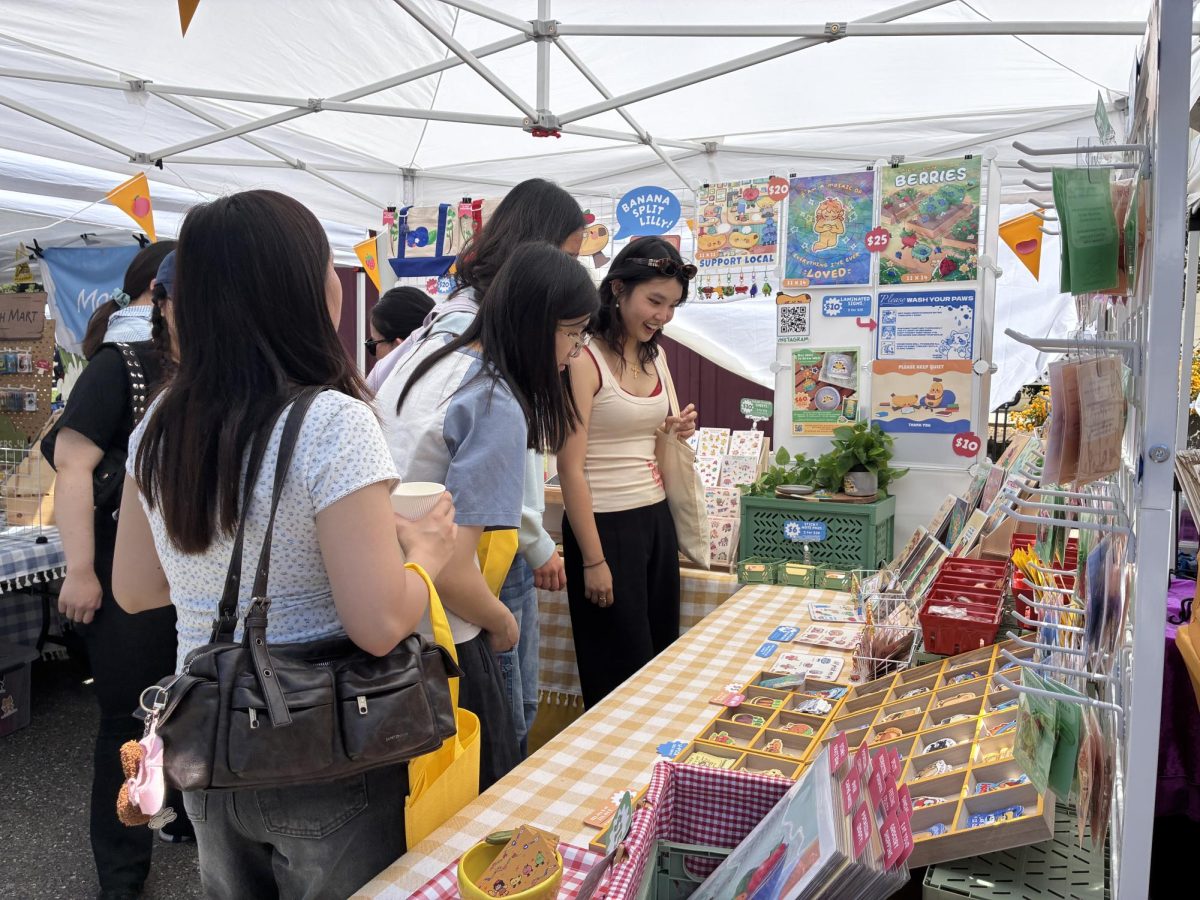














With declining numbers of Americans participating in organized religion and the rise of social atomization, it’s more important than ever that we find ways to be in community with each other.
The time Americans spend alone increases steadily after the age of 40, according to a Dec. 16, 2020 World Economic Forum article.
However, loneliness and isolation aren’t challenges unique to older people.
There is a growing segment of young people who aren’t in workplaces, schools or training programs and thus lack the traditional means of finding social connection.
They are called NEET, an acronym for young people not in employment, education or training, according to the Organisation for Economic Co-Operation and Development.
In 2025, one in four people between the ages of 15-24 worldwide were considered NEET, according to the International Labour Organization.
Having been a NEET for two years myself, I realized just how brittle our social infrastructure really is.
While I was unemployed and not going to school, I had few opportunities to engage with other human beings in a meaningful way, on a regular basis.
Being nonreligious, I didn’t go to church or temple, either.
All I had were parks, libraries and cafés.
A third place is somewhere that is not home or work, but a physical setting that encourages informal, free social interaction, according to a March 22, 2023 article by The UNESCO Courier.
Coined by American sociologist Ray Oldenburg in the late 1980s, third places are essential to the functioning of democracy, according to the same source.
While coffeehouses have historically been places of gathering and political debate, I find that these days, they’ve devolved into WeWorks where you can pay $7 for a latte and Wi-Fi just to sit and type on your MacBook in the ambient “company” of strangers.
My ideal third place is somewhere non-commercial and non-coercive and demands nothing more than my mere presence.
Grounded in the real world, third places promote social cohesion and a sense of community, while providing face-to-face interaction between friends, neighbors and strangers.
Befriending coworkers or classmates is not always easy, and relationships which depend on employment or enrollment can expire once you graduate or get laid off.
During my NEET phase, I cherished libraries, but I also yearned for something more.
Many organizations demand adherence to something for membership: political groups to ideology, faith groups to scripture, hobby groups to knitting, kayaking or whatever else it might be.
We need something less contingent, more lasting and with a lower barrier of entry.
I want to take a page from the Christians’ book (literally) and live in a symbiotic, cooperative and mutually-caring relationship with my neighbors – in other words, to love my neighbor.
But how can you love thy neighbor if you don’t even know thy neighbor?
In a March, 2025 Pew Research Center survey, 74% of U.S. adults said they know only some or none of their neighbors.
Among those who attend religious service, those who attend at least monthly were more likely to know all or most of their neighbors than those who attend less, according to the same survey.
I think it’s important that we learn to trust and rely on the people in our immediate surroundings, even if we don’t necessarily share the same interests, political views or religious beliefs.
Geographical proximity should be a greater determinant of community than it currently is.
After all, we cannot call on our Discord servers, sub-Reddits or Twitch stream chats to help in times of need, medical emergencies or natural disasters.
It would behoove us to get to know the people who vote in the same council elections or local ballot initiatives, for example.
In doing so, we might encounter people with drastically different views than us, but ultimately share a vested interest in improving the place we all call home.
While I couldn’t describe exactly what such a non-religious community would look like, I know they are sorely needed.
Some Americans have found community in secular spaces, where they tell stories and sing songs and do all the things church-goers do, minus the religion.
I am envious of my Hindu and Christian friends who gather with their religious groups to commune and break bread and play music to share in life’s trials and tribulations.
There is great joy to be had in being with others outside of work, family and school, but agnostics and atheists shouldn’t have to miss out.
Community is an essential human need – there is no sense in pretending we can live without it.