
























As Earth Day is celebrated across the country, San José celebrates local residents collecting over 77,000 tons of recycling over the past three years, as reported by San José Recycles.
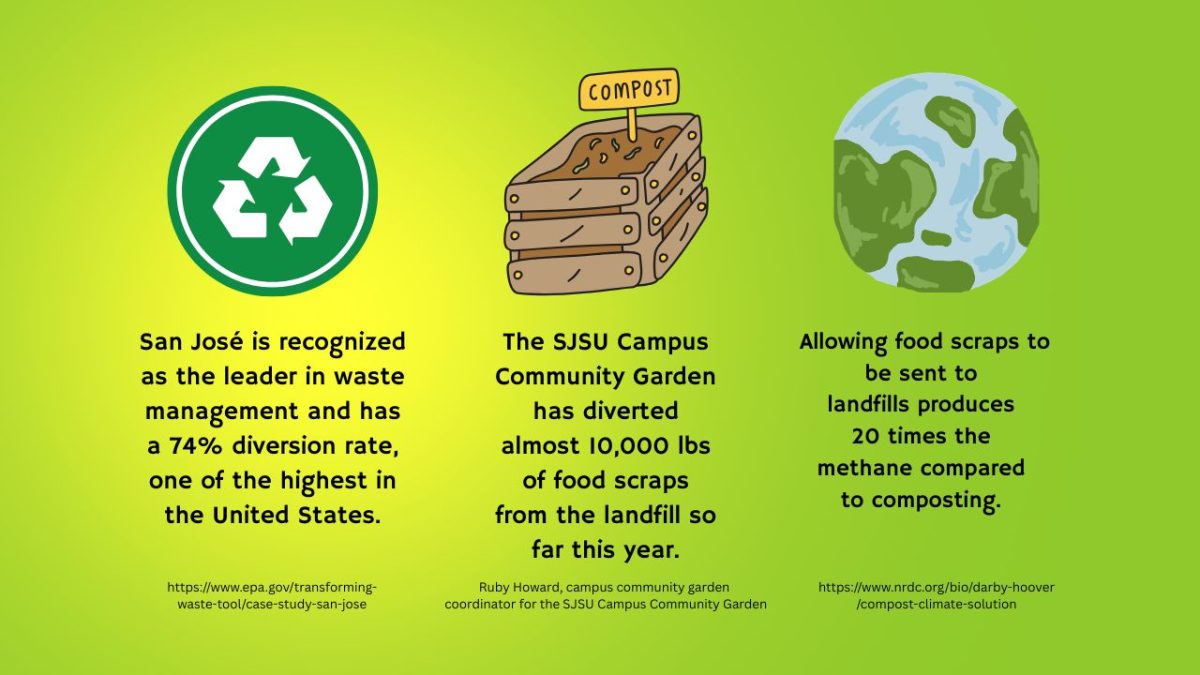
Recycling in San José is highly effective, with a 74% waste diversion rate, and is a nationally recognized leader in waste management, according to a Jan. 15 case study by the United States Environmental Protection Agency.
Waste diversion rate is the amount of waste kept from incineration or landfills, according to a CleanRiver Recycling Solutions Q&A page.
Katherine Cushing, director of the School of Planning, Policy and Environmental Studies, said in an email to the Spartan Daily that while the diversion rate is high, the efficacy of recycling is affected by people not properly cleaning recyclable materials.
“The contamination rate (e.g., not following instructions for properly cleaning glass or metal), can reduce overall effectiveness,” Cushing said.
The lack of programs and services is an obstacle for higher recycling rates, while many people also find recycling inconvenient or do not trust recycling systems, according to a Nov. 18, 2021 survey by the World Economic Forum.
Danilo Ortiz Hernandez, a fourth-year environmental studies student, said the issue is that many people aren’t concerned about recycling.
“When people’s needs are met, they don’t really care about stuff that doesn’t pertain to them,” Ortiz Hernandez said. “So unfortunately, it’s very hard to convince people to care enough to be more interested in recycling and composting.”
In San José, the city has online resources that provide information of what items can be recycled, how they are recycled and procedures for disposing of recyclable items, according to San José Recycles.
San José Recycles is a resource provided by the City of San José Environmental Services Department that informs people about how to recycle different items.
Most plastics used are PET, PVC and polypropylene, which are used for water bottles, pipes and food containers and are safe to dispose of in recycling, according to the same source.
Ortiz Hernandez said the best way to motivate people into recycling and caring about the environment is through social media and events such as Earth Day.
“Social media is great: TikToks, Instagram or any way you can outreach to like the youth specifically,” Ortiz Hernandez said. “And just providing spaces where people can come and meet like the gardening club at SJSU. These green spaces where people meet are super important.”
Ortiz Hernandez previously participated at the Associated Students (A.S.) Campus Community Garden for a semester as a volunteer.
The A.S. Campus Community Garden, located on the south side of campus at 372 E. San Salvador Street, was founded in 2014 and provides education on sustainable garden procedures, according to an Associated Students webpage.
The garden is on a quarter acre of land and teaches students the principles of permaculture and regenerative agriculture, which attempt to imitate the natural process of growth in plants, according to the same webpage.
Ruby Howard, campus community garden coordinator for the campus garden, said the garden creates its own soil from scratch on site.
“We collect food scraps from students through our compost window, the Spartan (Food) Pantry and businesses on campus like Panda Express and Jamba Juice,” Howard said. “We’ve diverted almost 10,000 lbs. of food scraps from the landfill so far this year.”
In the U.S., allowing foodscraps to be sent to landfills produces 20 times the methane as composting and compost after use nets negative emissions, according to a Dec. 5, 2023 article by Natural Resources Defense Council.
In California, Senate Bill 1383 was passed in September 2016, which mandated a 75% reduction in food waste by 2025, requiring businesses to donate excess food to the public and compost organic material, according to a RecycleSmart webpage.
Cushing said that managing food waste and promoting programs for composting are important, but require more individual and governmental action.
“Better ways of managing organic waste are needed at the individual and institutional level,” Cushing said. “Food waste alone accounts for 14% of global greenhouse gas emissions. People want to do the right thing, but we need structures in place to support actions that will allow more beneficial use of organic material.”