











The kink of calling men “daddy” shouldn’t be as socially accepted as it currently is, as human’s destructive nature has turned it into yet another method of diminishing women’s social status.
I am not kink shaming, but rather highlighting the negative implications and effects it holds.
When attraction is built around power imbalance, control and regression of women into childlike roles, it stops feeling neutral and turns into trends celebrating women becoming less.
People often normalize calling men “daddy,” defending it as playful and simply a sexual practice meant to heighten arousal.
But that doesn’t mean we shouldn’t question why this particular dynamic has become so broadly accepted.
Men being called “daddy” has to do with being dominated by what they perceive as an authority figure.
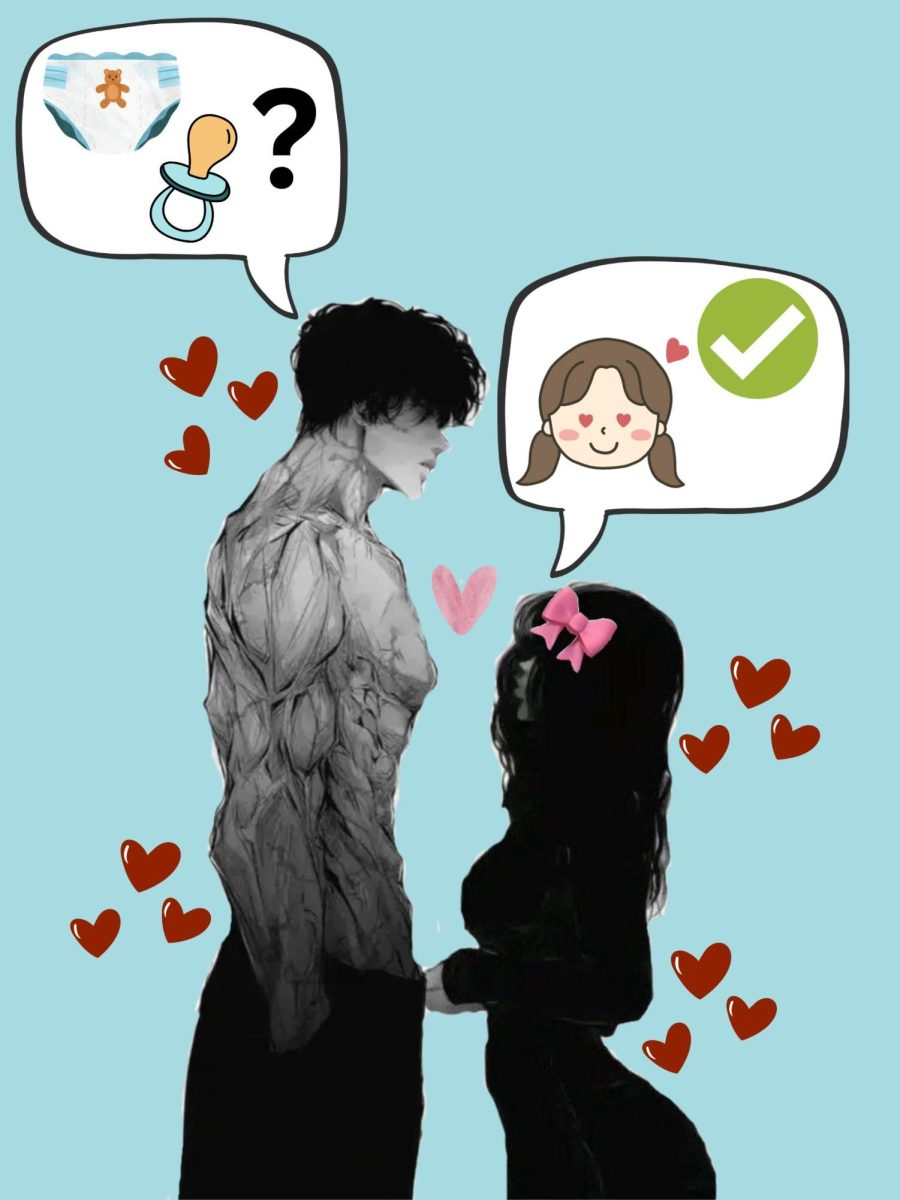
This is most commonly known as DDLG, Daddy Dom/Little Girl. DDLG is a consensual power exchange relationship where one partner takes on the authoritative role, while the other takes on a more submissive, childlike role, according to DDLG Meet.
While age play can be a factor, as in calling an older partner “daddy,” it’s not entirely relevant when the label is used.
But why be called “daddy” if you are seeking assertiveness? Why not boss or president if its dominance you want?
Such alternative names are less gross and don’t relate to a literal blood-related parent.
Similarly, this transcends into the LGBTQ+ community, as lesbian women and gay men also partake in DDLG relationships. Despite this, the implications and intentions remain the same. It’s still a sexual act of dominion.
This ties into a rare sexual paraphilia called paraphilic infantilism, where individuals adopt childlike roles or dynamics as part of sexual expression, according to WordPress.
Such people get sexually aroused wearing diapers, being spanked, sucking on pacifiers and other age regressing behaviors.
This differs from age regression, which is when someone reverts to a younger state of mind, according to Healthline. This is typically an involuntary, non-sexual coping mechanism, distinctive from paraphilic infantilism, which is deliberate role-play for arousal.
But it is important to note this is not the same as pedophilia. Pedophilia is an ongoing sexual attraction to pre-pubertal children, according to Psychology Today, something I will openly shame.
The two are different in that pedophilia is attraction to children typically under the age of 13, while paraphilic infantilism is only a desire to be a baby, not being sexually attracted to actual children.
However, it is irking to think people could be walking by you on the street and be jealous of toddlers in strollers.
If we have already belittled ourselves so much to the point of calling someone a parent to acting like a baby that needs to be taken care of, there is no telling where sexual desires will lead us.
The use of “mommy” restores some power back to women, but ultimately does not have the same detrimental effects as “daddy” since men continue benefiting from patriarchal societies while women are repeatedly set up for failure.
Infantilizing yourself for a man is downright weird and embarrassing, why is desirability so often tied to being less capable?
The women who fought for rights didn’t do so by presenting themselves as fragile or childlike; instead, they demanded recognition as full people.
The Seneca Falls Convention in 1848 marked the beginning of organized women’s rights advocacy in the United States, where women openly challenged their legal and social inferiority, according to a History article.
This momentum carried through decades of struggle, culminating in the 19th Amendment in 1920, which granted some women the right to vote, the same source reads.
However, the right to vote for women of color wasn’t granted until the Voting Rights Act of 1965, according to the Brennan Center for Justice.
These movements weren’t about being taken care of, but about being taken seriously.
So when modern culture circles back to trends of dependance, it’s a shift toward a reversal of rights that had to be fought for. It doesn’t necessarily take away the rights given to us by these movements, but does begin to diminish women’s social status, a shift that will only grow as similar behaviors are normalized.
For people thinking that a daddy kink or blaming mindless behavior on “just being a girl” isn’t serious enough to relate back to historical events, you’re wrong.
Feeling arousal when calling your partner daddy turns into girls filming videos of them coloring while their boyfriend is at work, saying they’re waiting for their boyfriend to finish his “big boy work.”
I have blocked all accounts with similar messages because we cannot be serious.
Being a “daddy’s princess” or saying “I belong to ___,” is a blatant shift from autonomy to attachment. “Passenger princess” is giving “baby on board.”
Some argue that true feminism means supporting any choice a woman makes, but belittling yourself for a man is not what being feminist means.
There is so much more to life than men and if you can’t see that then you shouldn’t have a man.
If you’re using the phrase, “I’m just a girl,” as an excuse to act dense, let me know when you’re ready to become a woman.