














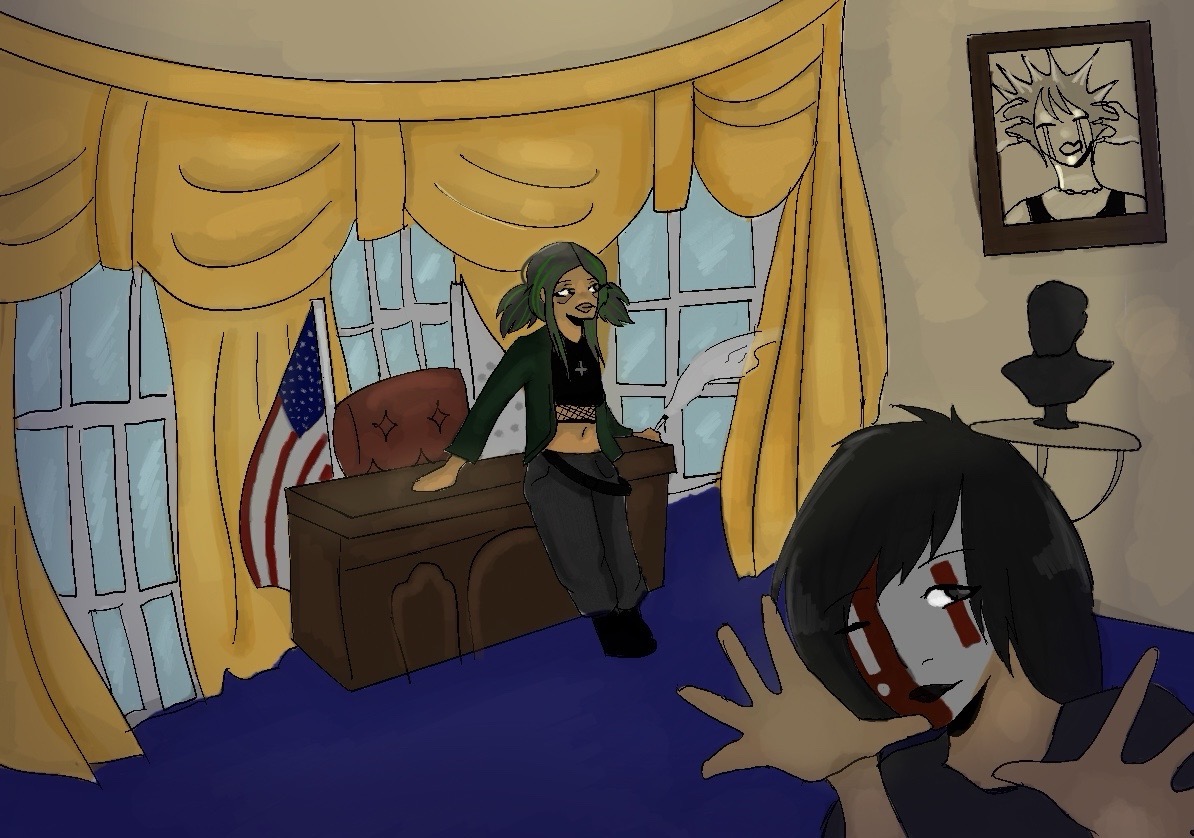
The beauty of metal is that songs are art pieces, ranging from confrontational perspectives on immigration and language to emphasizing how addictive the physical aspect of sexual pleasure can be.
Metal has never been just about distortion or aggression. I originally became interested in metal music because of its diverse vocal styles.
It quickly became all I listened to after discovering the various societal and political topics artists cover.
The first song I remember researching was “Trash” by KoRn.
The lyrics read, “These little girls, they make me feel so goddam exhilarated, I feel them up, I can’t give it up,” which exaggerates the singer’s sex addiction. While this is an amplified statement and is not entirely true, it is captivating enough for listeners to pay closer attention.
Although the meaning is graphic, it’s not an issue unique to the singer; instead, millions of people struggle with similar addictions.
Publicizing his personal suffering in song brings awareness to such matters that are frequently untalked about, either due to their level of discomfort or people only being used to songs talking about the pain of break-ups.
KoRn also gave life to “Last Legal Drug (Le Petit Mort),” which portrays the idea that love is the last legal drug, while also emphasizing the thin line between pleasure and pain during sexual encounters.
These songs are immensely intimate, but that’s just what makes them so enjoyable.
They resonate socially as they demonstrate to audiences that similar intimate conversations do not have to be secretive or considered vulgar when said aloud.
The line “When you cum, be a good girl, Hold your breath, make it last long” should make us all say “Thank you KoRn” in unison for teaching that there is nothing shameful about having sexual desires and that we must all have emotional nakedness.
“Speak English or Die” by Stormtroopers of Death contains an abrasive and confrontational tone, which functions as a provocation.
The band forces listeners to grapple with xenophobia and hypernationalism, whether by exposing them or amplifying them to grotesque extremes.
Most may get distracted by the song’s harsh and loud instrumentals, but it is a message that those who do not conform to the dominant culture are scum of the earth.
This is seen in the lyrics: “Why must I repeat myself, Can’t you f*ckin’ read? Nice f*ckin’ accents.”
Through their inflammatory tone, Stormtroopers of Death show how illogical it is to blame immigrants for societal issues.
The vulgarity, as well as hostility, was done on purpose by the artists to add shock-value provocation, according to the website Song Facts.
My point that metal is political, societal and personal art can be demonstrated by more examples than I have the room to write.
More examples include Earth Crisis’s “Firestorm,” which contains “Violence against violence, let the roundups begin,” a message calling for direct action against drug culture and societal decay.
Even the title is a piece of art, implying that only a firestorm can purify the bane society is drowned in.
“Corrupt politicians, corrupt enforcement, drug lords and dealers; all must fall,” is another line that shoots the problem of how moral decay and violence contaminates societies right in the heart.
I could continue naming artists and songs to prove how they are simply political speeches in song form because hundreds of examples exist.
Most metal bands and artists confront harsh topics with unfiltered honesty.
They may not offer solutions and their rhetoric can be polarizing, but their willingness to speak loudly about uncomfortable truths is precisely the point.
In an era where political discourse is often diluted in the hands of old men and artificial intelligence is increasingly becoming a new genre of music, metal remains a shining, expansive and emotionally raw light in a world of darkness.
I urge listeners to not subject metal as simply a genre of loud instruments and vocals, but a genre of political, societal and personal commentary on important real-world issues.