
















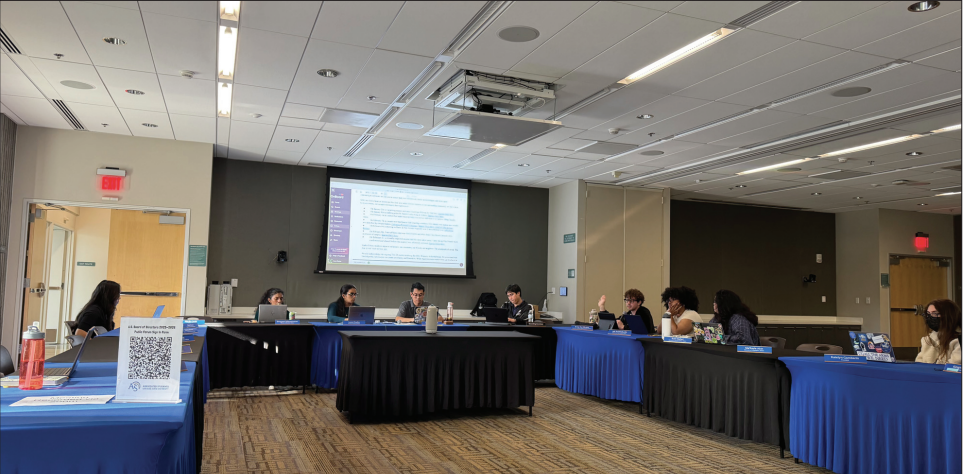
On Wednesday, the Associated Students (A.S.) Board of Directors held its bi-weekly meeting in Student Union Meeting Room 1A and discussed AI transparency, equity and integrity, campus incidents and funding for meal swipes.
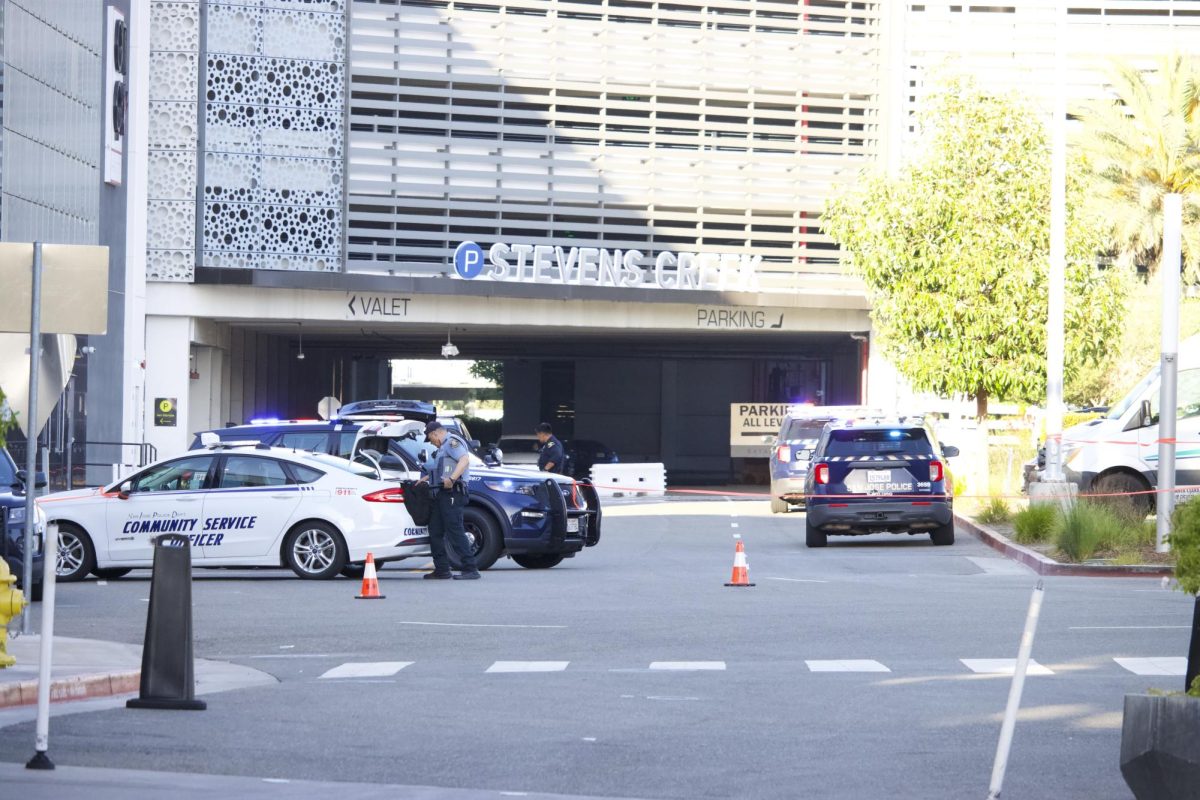
The board reviewed a written statement in response to recent incidents impacting the community by Adi Sereima Tuidelaibatiki, director of intercultural affairs and other members of the board.
Heather French, the associate vice president and dean of students at San José State, spoke about her concerns for a section in the letter.
“My recommendation or request is whether you can just reference like previous messages to campus because I am worried, thinking about it from the lens of student wellness, that some of this could be retriggering for people,” French said.
The reasoning for adding the bullet points was because the board felt it was important to be transparent with students of what is happening on and around campus.
Jhony De Oliveira, director of student rights and responsibilities, said A.S. prioritizes the transparency between the students and it.
“One thing that’s important to take into account is that one way our board goes is the transparency within the SJSU community, so that is the reason why we decided to maintain it this way,” Oliveira said.
French said she understands Oliveira’s reasoning of the board to add the incidents, but believes the same accomplishments could be made by referencing earlier communications that are on university communication services, like the Spartan Safe app.
The Spartan Safe app is a safety app for SJSU students that grants them easy access to safety and security systems, according to a San José State webpage.
Oliveira said he believes the issue is that the Spartan Safe app only included incidents that are UPD related.
“Not all of those incidents are on that page to be very transparent,” Oliveira said. “There haven’t been any communications from A.S. to the campus community and I think it’s the time to communicate with the students.”
Kingson Leung, Interim Executive Director of A.S., suggested finding a happy medium that allows people to opt-in to seeing more details to avoid retriggering students.
Oliveira said board members of A.S. who also serve as academic senators are working on a sense of resolution related to the CSU AI initiative because of concerns about students using AI.
The Cal State Student Association recently passed a white paper on inequity, access and implementation when it comes to AI, according to a Feb. 24 Cal State Student Association webpage.
A white paper document is a term for a government document report, according to a Purdue Owl webpage.
Oliveira said A.S. plans to advocate for students while serving in the academic senate.
“My main issue is when it comes to just sending these students to conduct for using AI without actual proof,” Oliveira said.
Laura Charles, A.S. director of internal affairs, shared a story told by a professor at the Academic Senate Retreat of a situation where students were falsely accused of using AI.
“Thirty-six students from one class, from one professor, five were actually found who have used it with proof,” Charles said.
Oliveira said that as of now, the board sees no clear policy on how to deal with AI situations, but that the directors feel it is important to call upon upper leadership to work on the issue.
“Students are just getting punished left and right for no reason, for even using the smallest thing that they think is AI,” Oliveira said.
A.S. approved funding for $532 to serve 17 students by providing two meal swipers each to the students who filled out a request form.
Janely Pulido, leadership and government coordinator for A.S., said more people applied for meal swipe support than expected, so the idea was brought back for more funding to go toward students.
Five different options were proposed, but two of those options were too cost effective for the budget to cover.
Pulido spoke on behalf of Teairra Brown, director of student resource affairs for A.S, who was not in attendance.
Pulido discussed meal swipe options and the funds A.S. will be left with depending on the option they select.
“Option two, where you at least start connecting with the students and giving them all one swipe might be the route to go and then readdressing with the same students because then they get put into that system already on the side where they’re getting the swipe from,” Pulido said.
The third option, which was $871.43 to fund meal swipes, passed in the final vote, 8-0-0.
The meeting closed out with director reports from each of the board members present, along with a statement from Leung to the board.
“I’m really honored for you all believing and trusting in the leadership, I really want to be thankful about that for all of you and I’m excited to be able to do this,” Leung said.