













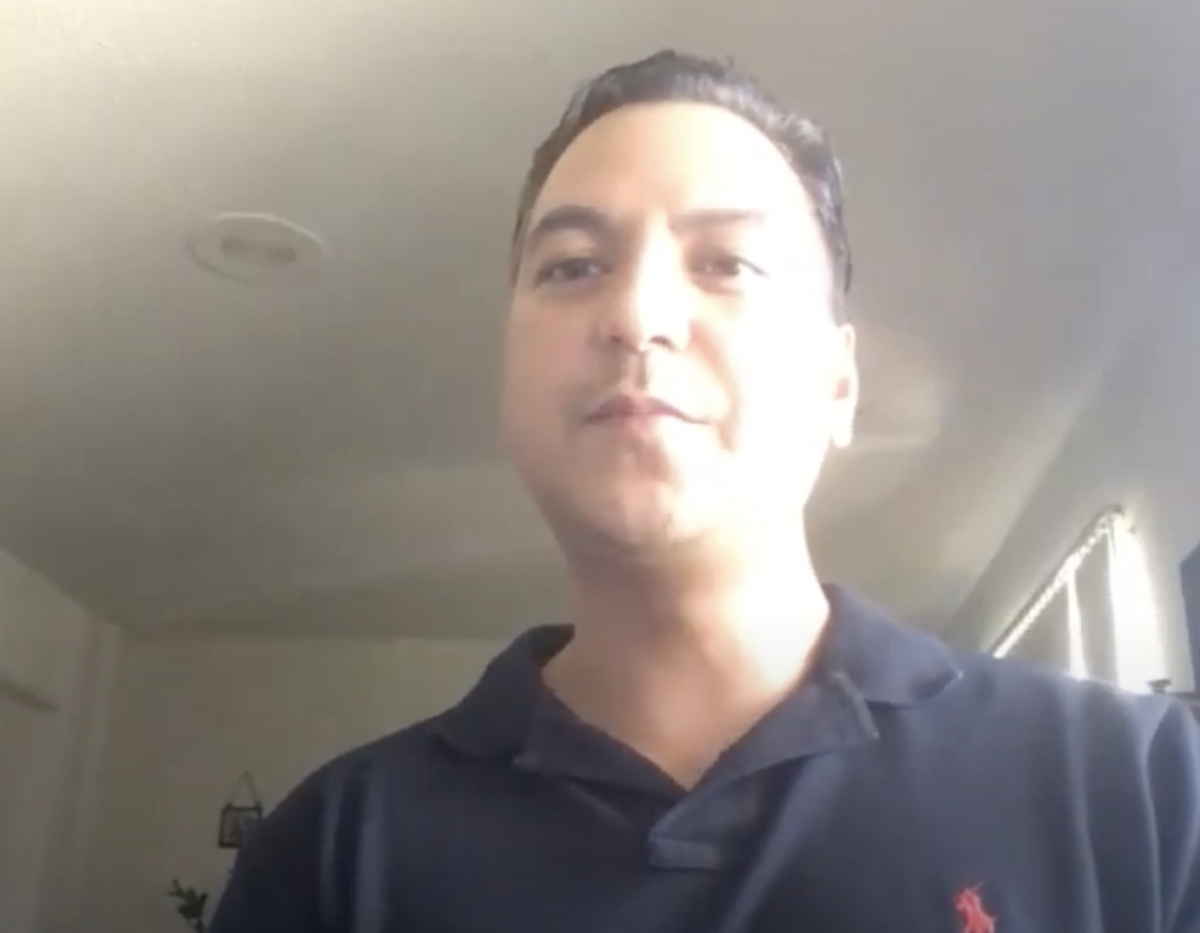








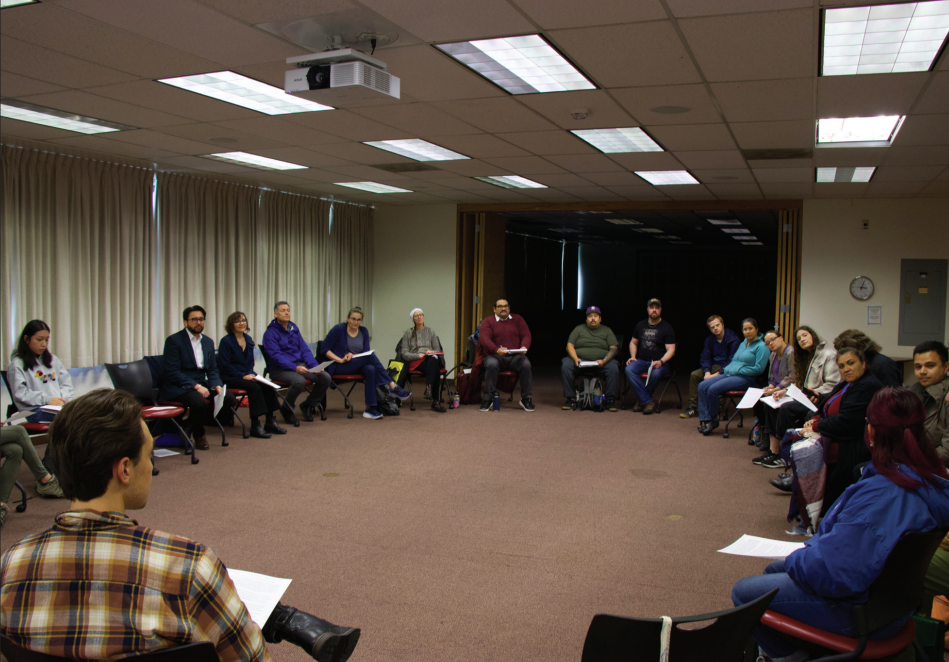
San José State faculty and students gathered for a teach-in to discuss César Chávez on Tuesday in the Charles W. Davidson College of Engineering.
Sexual abuse allegations against César Chávez, co-founder of United Farm Workers and a renowned civil rights leader, resurfaced in an investigation published March 18 by The New York Times.
The report prompted the renaming of programs, streets, buildings and more named after Chávez across the country, including SJSU.
Participants of the teach-in were handed papers that listed community agreements, or acuerdos, that outlined guidelines to follow during the open conversation.
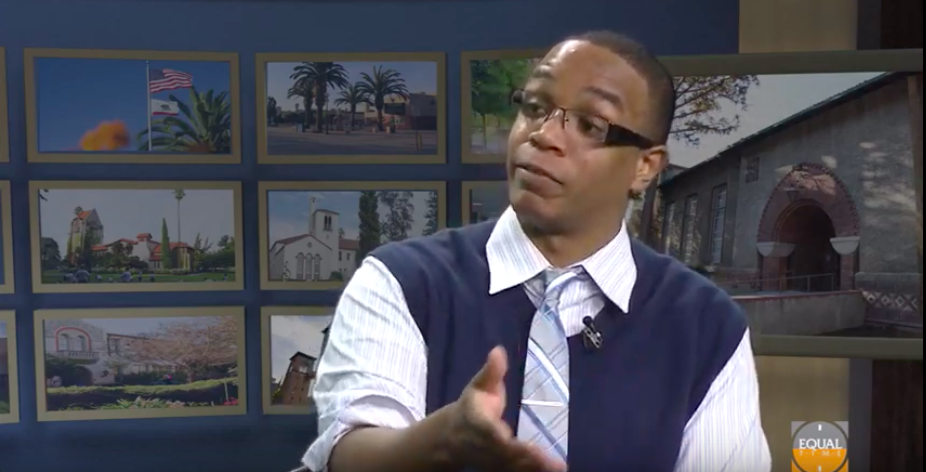
Jonathan Gomez, assistant professor of Chicana and Chicano studies, was the moderator of the event.
“The teach-in is a communal, collective opportunity to learn together,” Gomez said. “These teach-ins bring us together as a community to see, listen to and be in the vicinity of others who are thinking through these different incidents.”
About 35 participants sat in an open circle to prompt conversation.
During his opening address, Gomez said that finding out ugly information about your heroes can feel like a betrayal.
“Many people understand the United Farm Workers as being an organization that stands up for people who are readily disregarded and for this leader in the United Farm Work workers to harm those very people, just felt absolutely terrible,” Gomez said.
The farmworker movement came from decades of exploitation of migrant laborers and gained momentum in the 1960s when leaders like Huerta and Chávez organized strikes to fight for fair wages, better working conditions and the right to unionize, according to a Dec. 1, 2014 Equal Justice Initiative article.
SJSU President Cynthia Teniente-Matson said teach-ins like this provide a range of voices.
“For some people, this is a very personal issue and others are trying to make sense of what it means,” Teniente-Manson said. “I think that’s our job, as a public university, to help each other think about this very complex manner.”
Dolores Huerta, co-founder of the United Farms workers, was one of the many women assaulted by Chávez, according to the March 18 New York Times article.
Huerta chose to stay silent because of the fear of public backlash for attacking a Latino political advocate, according to the same article.
Tanya Bakhru, a women, gender and sexuality studies professor at SJSU, offered her perspective through the lens of reproductive justice.
She said that Chávez’s sexual abuse highlighted continuous layers of violence and a broader issue of women’s labor being minimized.
“We can see across a lot of different movements that women’s contributions are essential but their safety in leadership is not always protected,” Bakhru said.
Concern about future curriculums and how César Chávez will be represented in history was a common theme during breakout group conversations.
San José city crews plastered over Chávez’s name at Plaza de César Chávez on March 20, according to an NBC Bay Area article.
The César Chávez Action Center was also renamed the Community Action Center on March 20, according to its Instagram.
Participants shared concerns about Chávez’s erasure from history and the impact of the farmworkers movement’s legacy.
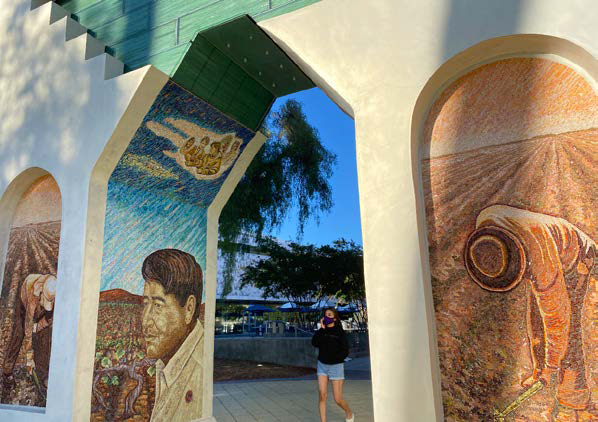
A campuswide email sent by Teniente-Matson on April 20 stated that university leadership will be working with the Art Committee to examine physical representations of Chávez throughout campus.
“As a community, (we’re) thinking about how to protect the structure and integrity of the arch, while also reconciling what to do with the reflections of César Chávez,” Teniente-Matson said.
Carrmine Arredondo, a second-year radio, television and film student, said that Chávez was held in too high regard on campus in the first place.
“We’ve mythologized him,” Arredondo said. “It’s very hard for us to grasp just what that does and how we can handle it.”
Arredondo said stripping Chávez’s name is just a start.
“We should explain why this is happening and explain it in a holistic way where we should be critical in more aspects than one,” Arredondo said.
The majority of the group’s concern about the discrediting of Chávez’s legacy is the effect that it will have on the history of the farmers workers rights.
“There is no one perfect individual that represents the farmworkers movement,” Teniente-Matson said.
Participants also talked about victim blaming and its prevalence in Latina communities and what accountability at SJSU looks like.
Gomez said that the teach-in was spearheaded by the Office of the Provost to allow people to come together.
“I think that it will be important for this not to be a one and done kind of conversation, but to engage in a continual process of learning with the different folks that were in this room,” Gomez said.