


















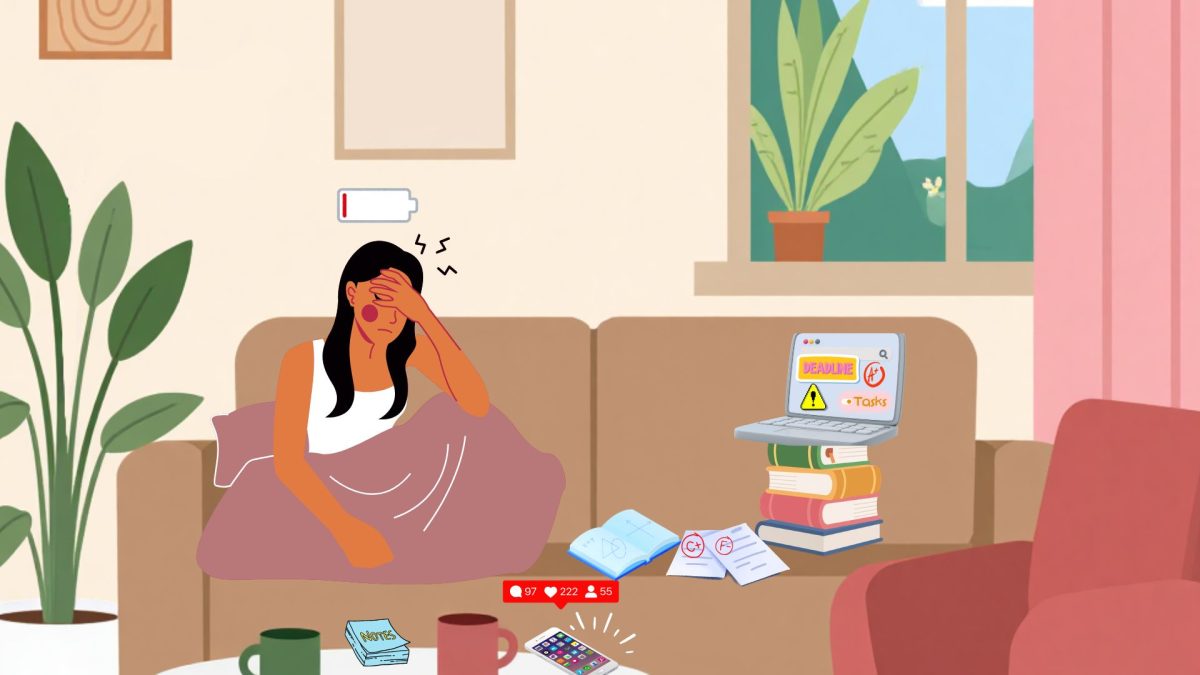
On social media platforms, college burnout is no longer a shared experience students vent about in agony, it has become performative.
While social media offers an honest glimpse into peoples’ lives, it has increasingly blurred the line between venting and romanticizing exhaustion.
If your TikTok “For You” page is anything like mine, you will come across local eateries to try around San José, small businesses near campus and students from other universities sharing their daily lives.
However as the semester comes to an end, I’ve noticed the glorification of college burnout.
TikTok users ambrosiaa09 and maria.pagniano5 shared struggles they face on as students.
Ambrosia has shared videos of her doing homework, her notes and romanticizing burnout because mediocrity scares her more.
Pagnia, a first-year nursing student shared how she is sleep deprived, emotional, broke and anxious everyday.
Students are sharing their packed class schedules along with jobs, internships and extracurricular activities, while admitting they can’t keep up with the workload.
At first glance, it may seem motivating and admirable.
However, beneath the surface lies a concerning reality of students romanticizing stress, overworking and burnout as a badge of honor.
I can appreciate the sense of a shared experience, but I don’t think we need to romanticize the stress, crashouts or overall well-being for the sake of likes, shares and follows.
This trend reflects a broader cultural shift where productivity defines your personal worth.
For some students, being busy isn’t just a necessity but becomes part of their identity on social media.
I have been guilty of comparing myself to social media influencers and wondering if I should be taking more classes to finish school sooner. However, by the time midterms and finals approach I quickly reconsider that thought because I’m overwhelmed with deadlines due around the same time.
While these influencers take five or six classes, that doesn’t mean I’m doing less. We all learn and retain information at different paces.
Posts that highlight exhaustion are wrapped in aesthetically-pleasing visuals, creating an illusion that burnout is not only normal, but desirable.
The message delivered to the audience becomes clear: if you’re not overwhelmed, you’re not doing enough.
Taking on excessive coursework, working long hours and sacrificing sleep may seem impressive in a 30-second video. In reality however, this can lead to decline in mental health, reduced academic performance and physical exhaustion.
These are all symptoms of burnout, when ongoing stress leads someone to feel overwhelmed and drained, according to a Mental Health America webpage.
Burnout is not a sign of success, it’s a warning sign that something is unsustainable.
Part of the problem is that students rarely show the full picture. Social media thrives on curated moments, not honest ones.
The Wellness Corner website shared how social media can also make its users not feel good about themselves.
Individuals with low self-esteem use social media to uplift themselves, constantly post for the hope of getting brand deals and recognition, escape from reality or prioritizing self promotion over empathy and compassion, the website said.
This selective sharing distorts reality and sets unrealistic expectations for others who may feel inadequate if they are not constantly pushing themselves to the same extremes.
Burnout out can lead to mental health disorders like anxiety, depression and substance abuse issues, according to an October 2024 article from the American Society for Clinical Laboratory Science.
An article published by Mental Health First Aid shared self-care rituals students can do for themselves to prevent burnout.
Cleaning spaces such as your work space, bedroom or home, drinking more water instead of caffeinated beverages to maintain a clear mind, journaling weather writing down gratitude thoughts or feelings or words of encouragement, plenty of sleep, nutritious meals and exercise- enough walking out for 20 minutes, according to Mental Health First Aid.
Colleges and students alike need to challenge this narrative.
Success should not be defined by how exhausted you are, but how sustainably you can achieve your goals.
Taking fewer classes, prioritizing mental health and setting realistic expectations should be seen as smart, not shameful.
Social media can also play a role in shifting this culture. Instead of glorifying overwork, students can use their platforms to promote balance, honesty and well-being.
That means sharing more than just the constant grind, but showing moments of rest, family dinners, walks outside, workouts, laughter and even the unproductive days.
Ultimately college is meant to be a time of growth, learning and exploration, not chronic stress and burnout.
Romanticizing unhealthy habits for views and validation undermines the very purpose of education. It’s time to stop celebrating exhaustion and start valuing balance.
One of my personal goals this year is to be more present and focus less on capturing moments for content, and instead actually living them.
Success isn’t about doing the most, it’s about doing what matters and doing it well.