
















Tanking in the National Basketball Association (NBA) is part of the strategy basketball teams deploy in today’s culture.
Tanking is when team management doesn’t put its best foot forward in terms of winning, according to an April 1, 2020, Samford article.
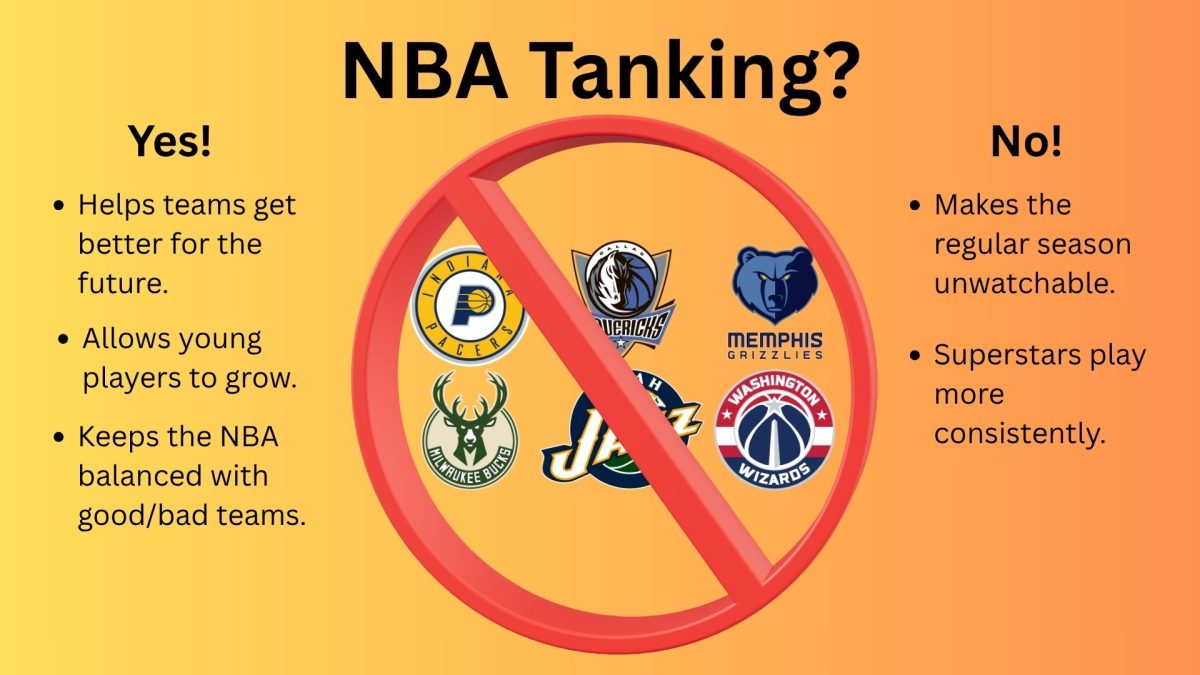
I believe that tanking is good for the NBA and it specifically helps keep the postseason fun, while giving bad teams the best chance to be successful in the future.
Tanking teams intentionally put out “bad lineups” to lose games to secure better odds at the highest picks in the NBA draft.
These “bad lineups” actually make an impact later on, as young players get a chance to learn and grow against real NBA competition.
Teams such as the San Antonio Spurs, Houston Rockets, Detroit Pistons and Oklahoma City Thunder recently have turned the corner and become very successful.
The Thunder tanked in a special way where they not only would not play their players because of “injury,” but they would take on players from other teams in exchange for extra draft capital.
To be fair, they were helped out enormously by the Paul George trade, where they received five first-round picks.
This did not stop them from trying to lose games, as proven by the multiple meme graphics that have come out of some of their starting lineups.
On top of tanking benefiting bad teams, it can also help the roster construction of championship teams.
Good players who are traded from tanking teams to championship teams help bolster rosters that are competing for titles, which makes later-stage playoff games more intense.
When teams tank, it also gives their younger players a great chance to develop into better players.
Using the Utah Jazz as an example, guard Keyonte George is currently breaking out as one of the premier young players in the NBA.
Over the past two seasons, George has been bad, one of the worst players in the NBA, and has been getting destroyed by opposing guards every night.
These minutes have become invaluable for his development and have directly contributed to him becoming a much better player at a young age, while helping the Jazz lose so they could pick more players early in the draft.
If the Jazz had prioritized picking up an old veteran guard and played him over these last few years instead of George just because he was better, they wouldn’t be in as good a position as they are now.
Tanking doesn’t mean losing on purpose; it means not putting out the best possible basketball team in the moment for better future gain.
Putting young players first allows teams to rightfully be at the top of the lottery to land top prospects and build out their team as they simmer and grow together.
The Pistons are title contenders and the No. 1 seed in their conference after being the laughingstock of the league just three years ago.
A core group of players that has been growing and working together for years finally blossomed and, with the addition of a few veterans, took the leap to a top-tier team.
Now, looking at the Chicago Bulls or the Sacramento Kings, who have been middle-of-the-pack for years, they don’t prioritize acquiring and developing young talent.
Overall, tanking can be taken to extreme lengths, but no coach or player goes out there to lose games on purpose.
The organization puts the team in a position to grow to give itself the best chance at the future, which in turn keeps parity in the NBA by maintaining a balance of good and bad teams.