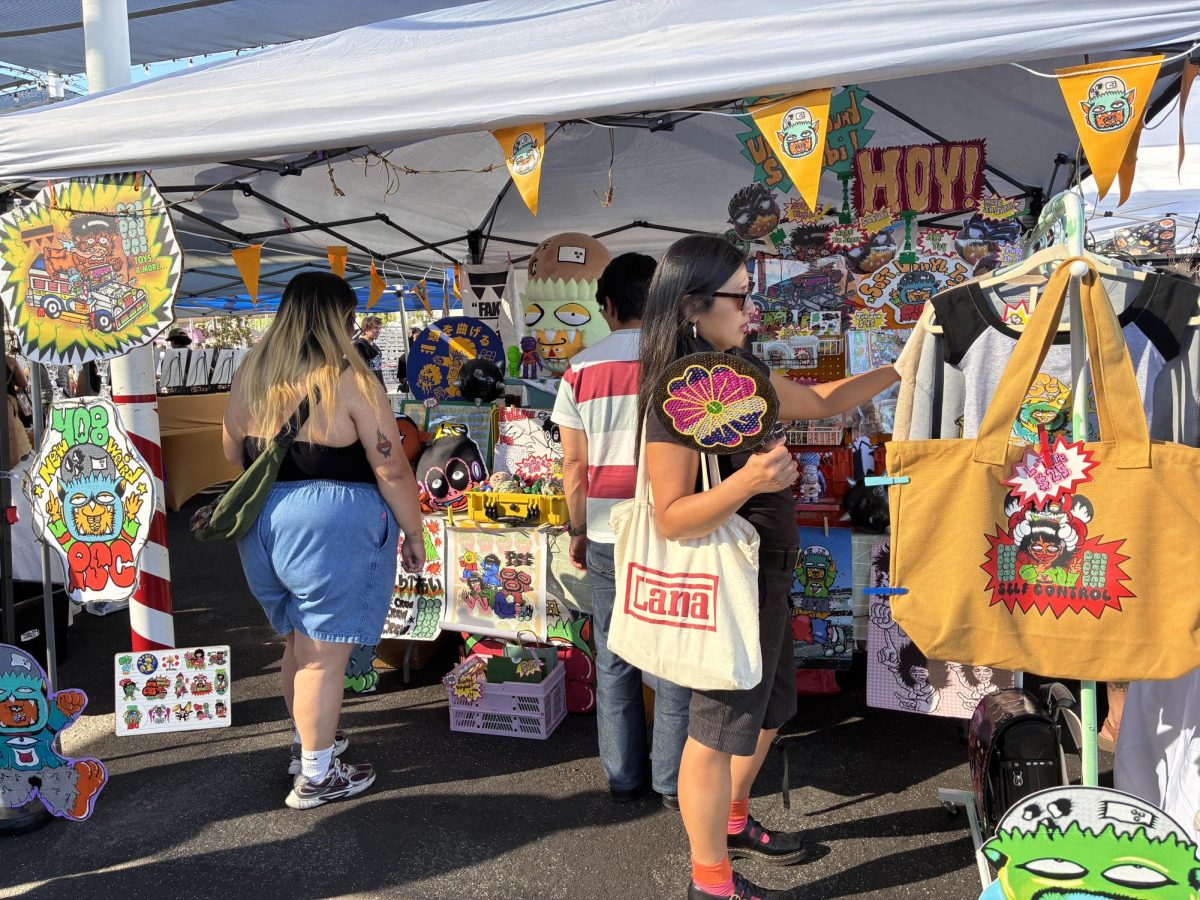

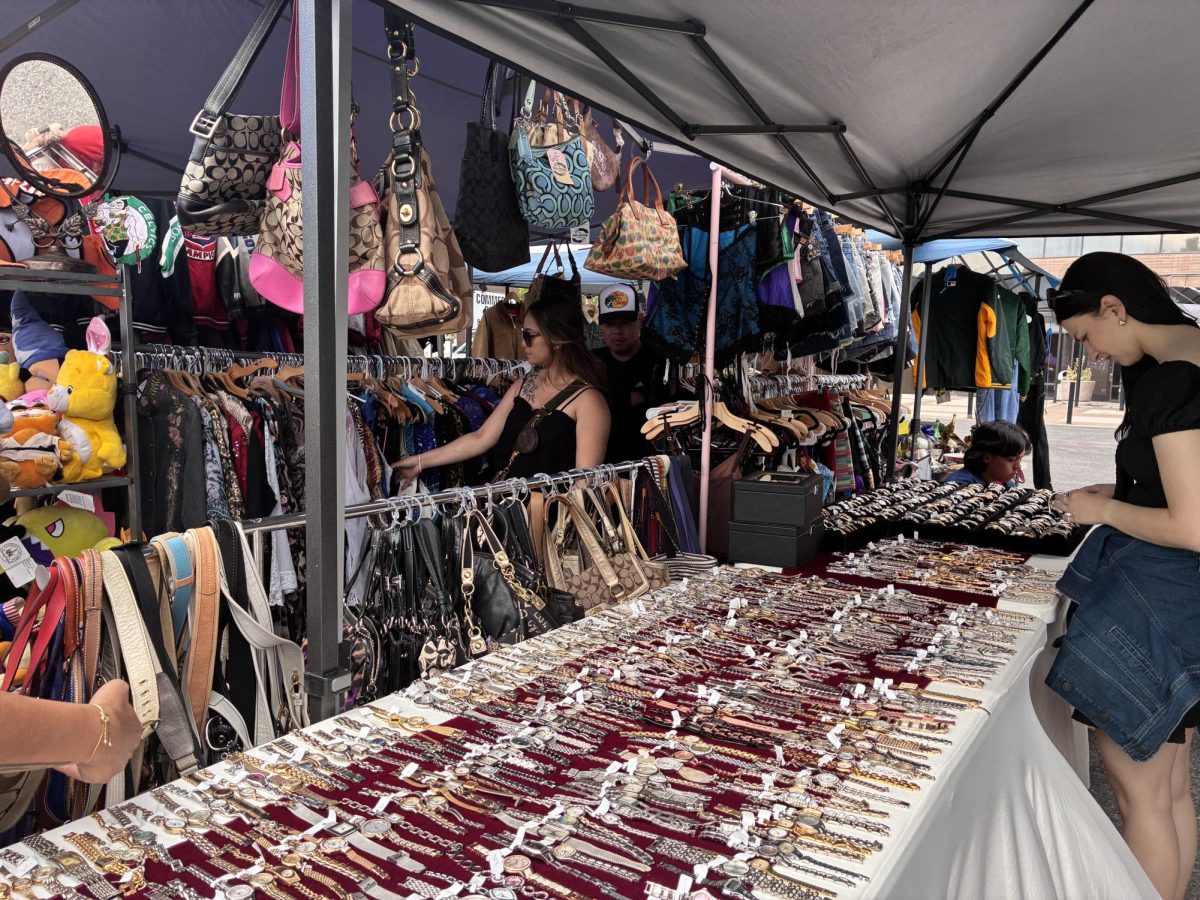
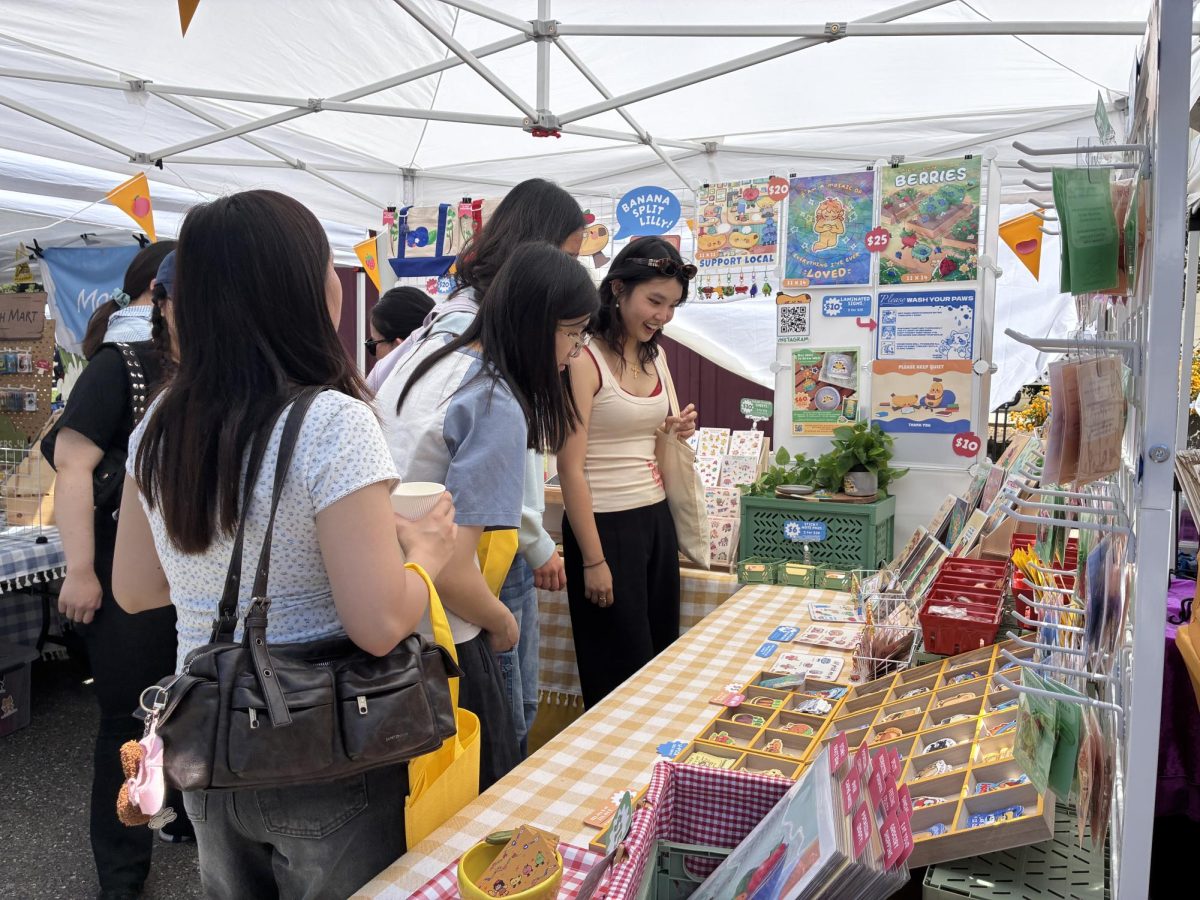









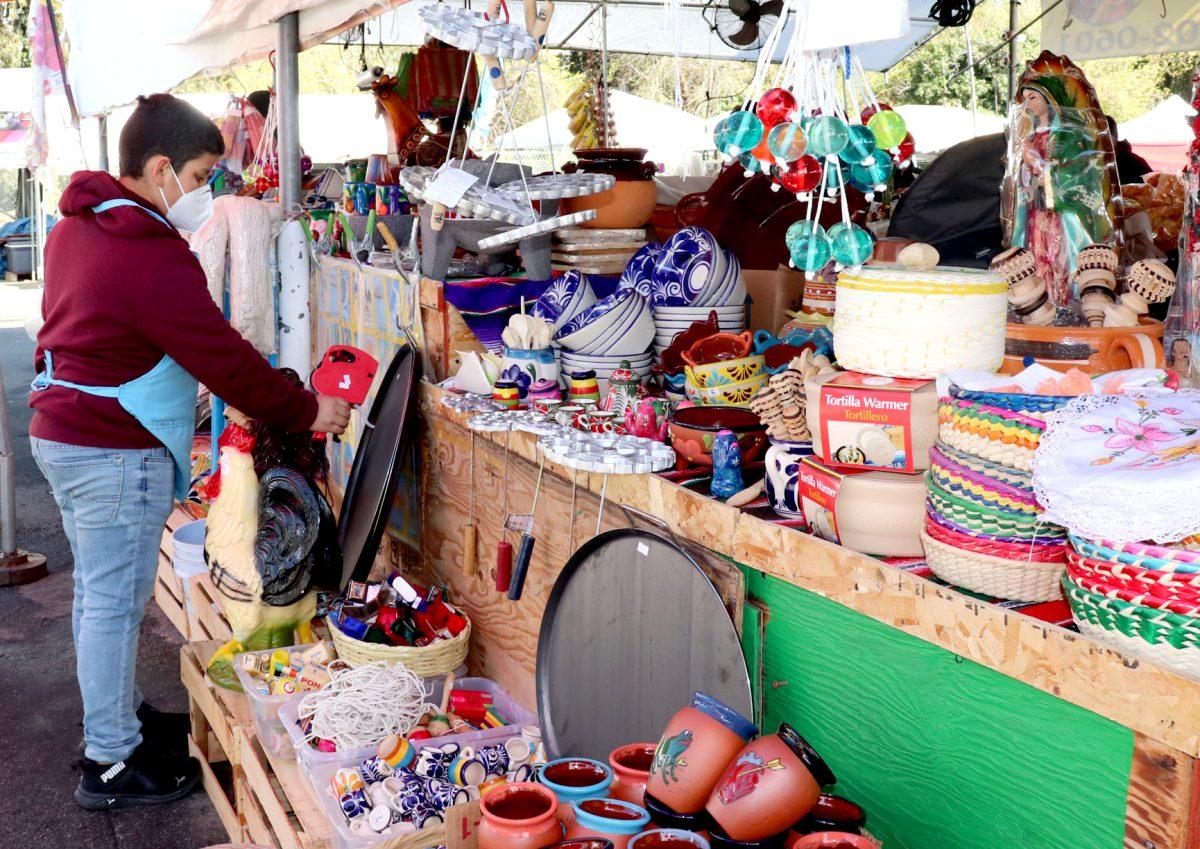



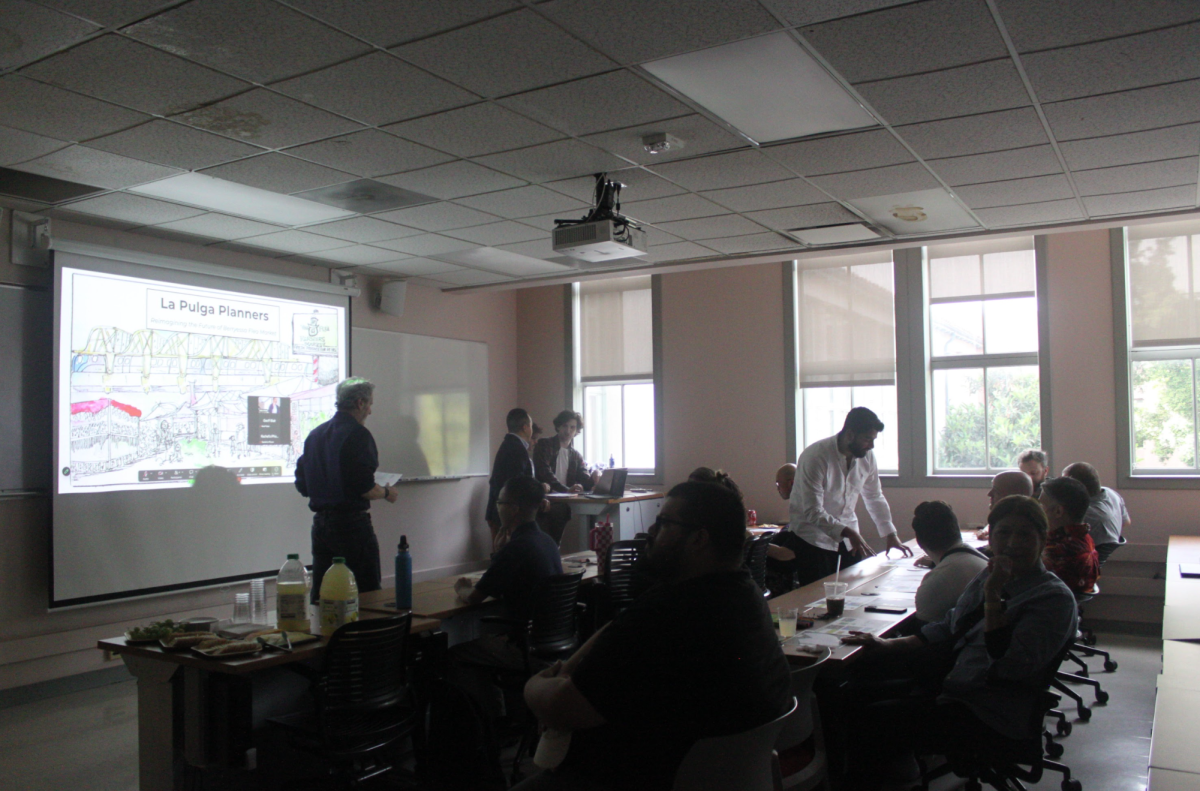
Graduate students in the masters urban planning program at San José State presented research centered around the San José Berryessa Flea Market, a longstanding community space with deep cultural and economic roots, in Washington Square Hall on March 26.
Led by Senior Lecturer Richard Kos, 19 graduate students participated in the Springs’ Capstone Studio class continuing a project about the flea market from the fall.
“Our profession is all about improving communities, this market has been around since 1960, it’s a cherished cultural institution,” Kos said.
The San José Flea Market spans more than 120 acres and began on farmland along Berryessa road by founder George Bumb in 1960, who was inspired to create a space for reselling discarded items he saw while working in the waste and landfill industry, according to its website.
The future of the flea market is uncertain, with the private owners of the lot wanting a redevelopment of the land, according to a Dec. 15 San José Spotlight article.
Though the flea market gives the impression of being a public gathering space, it sits on privately owned land adjacent to a major transit station.
For Kos, this highlights a broader outcome of the market’s possible relocation in urban planning.
This market is particularly interesting to Kos and the capstone class as urban planners.
“Our profession is fundamentally rooted in serving public interest and this is a beloved institution that serves many communities,” Kos said.
Fernando Cruz Esparza, a second-year urban planning masters student, said the market is widely known by locals as “La Pulga,” which means “the flea” in Spanish, and it continues to serve diverse communities in San José.
It has functioned as a third space for immigrant communities, small business owners and multigenerational vendors who rely on the space for economic opportunity and cultural connection, according to Esparza.
“When we asked people how many years they were coming to La Pulga, usually it was around five to 10 plus,” Esparza said.
Esparza said La Pulga is like a third place.
“Your first space is your home, the second one is where you work and the third space is where you go to reconnect with different communities to practice your traditions, socialize, relax and enjoy your day,” Esparza said.
La Pulga is open every Friday, Saturday and Sunday, according to its website.
Esparza said the team conducted 55 customer surveys to better understand where each visitor travels from.
Respondents came from places including downtown San José, the Spartan Keyes neighborhood, San José Japantown, as well as Manteca, the Central Valley, Seaside and Monterey County.
Esparza said many respondents describe the market as more than just a place to shop.
“Sometimes they just pay the admission fee to literally be with their family and walk around,” Esparza said.
Esparza said the team also conducted a vendor survey, collecting 40 responses, which represents about 7% of the market’s vendors.
“When asked whether they would prefer relocation or a reduced footprint of about five acres near the BART station, most vendors expressed a desire to remain together,” Esparza said.
“Most people prefer to stay altogether and be relocated, no matter where they end up,” Esparza said.
He said some vendors would choose to stay if the market was reduced in size.
“Most vendors do want to expand their business, they express to us that they would enjoy marketing for their businesses,” Esparza said. “They would like to see an expansion for people to just show up and make a living out of it.”
For many vendors at the Berryessa Flea Market, selling goods is not supplemental income, it is their primary livelihood and way to support their families, Esparza said.
Attendees at Thursday’s meetings shared personal experiences about the market, highlighting memories with vendors and reasons the market keeps them returning.
JoAnn Sandoval, community organizer at Puente de la Costa Sur, attended the urban planning event and is part of the outreach team focused on community engagement with vendors and customers.
“We’re planning to do more vendor surveys in this next second phase of this project,” Sandoval said. “What we’re working on with the vendors is ensuring that they have a say in what the new site will look like.”
Puente de la Costa Sur is a non-profit that supports south coast community members through health and wellness programs and education assistance for youth, according to its website.
The findings at the meeting represent phase one of the students’ project, with a second phase presentation expected to take place on May 14 at the Dr. Martin Luther King, Jr. Library on campus.
“We are in the process of putting together an amazing final, we’re gonna call it a celebration of this project completion in May,” Kos said.