

















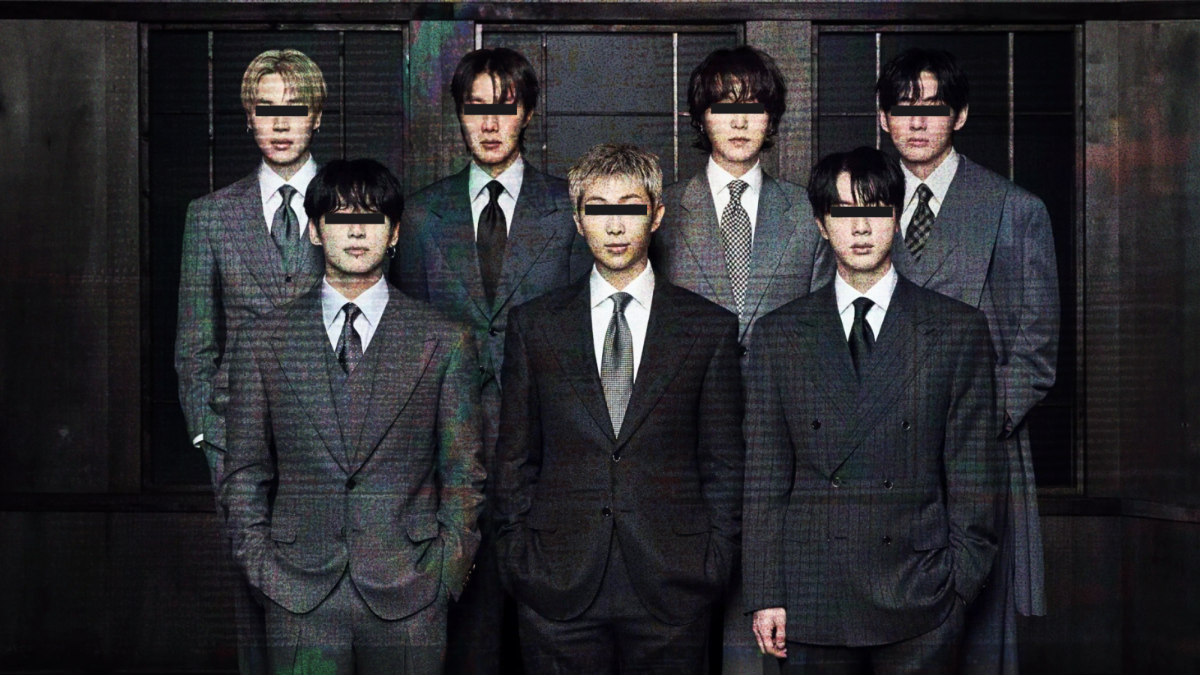
After a four-year hiatus, BTS is back with their fifth studio album, “ARIRANG.”
But instead of the authentic, vulnerable and culturally-grounded project it was cracked up to be, “ARIRANG” is just straight-up bad.
After cycling through Korea’s mandatory military service and embarking on brief solo stints, the seven members of BTS reunited in L.A. last summer to write, record and produce their comeback album.
In Apple Music’s ARIRANG Interview with Zane Lowe, J-Hope confesses, “We felt like we weren’t really enjoying ourselves.”
Lowe is quick to ingratiate himself to the superstars: “You know, you can’t tell,” he says, shifting uncomfortably in his seat. “… I think, start to finish, it’s a really, really great record.”
“ARIRANG” is far from a “great record.”
It is a banal, industrially-manufactured product that tries too hard to please too many people.
Its lyricism is so simplistic as to evoke Timothée Chalamet’s impression of a white SoundCloud rapper on SNL (see track seven, “SWIM”).
But worst of all, it is a testament to K-pop’s cementation as a thoroughly commercial enterprise and BTS, its fattest cash cow.
If you were too naive or too enamored with the group to realize it during their come-up (as I was), their latest effort should make it abundantly clear to you now.
BTS was never about making art – it was about making profit.
As former Disney CEO Michael Eisner said about the entertainment industry in 1981, “We have no obligation to make history. We have no obligation to make art. We have no obligation to make a statement. To make money is our only objective.”
And if that pursuit of money just so happens to result in art, history or statements along the way, so be it.
This is the lens through which fans should appraise “ARIRANG,” and perhaps, all of South Korea’s pop-cultural exports.
It’s foolish to think that Korean culture is anything more than a prop in the megagroup’s pursuit of an ever-expanding share of the global music market.
The few references the group makes to their homeland in the album feel cheap and gimmicky.
For example, in track six, “No. 29,” listeners are subjected to a minute and a half of near-total silence as the Sacred Bell of Great King Seongdeok, one of South Korea’s national treasures, tolls once, then fades.
The recording was the first time the bell was struck in several decades, according to a Friday article by The New York Times.
The fact that millions of people around the world have now heard the sound of that bell is cool and all, but it feels very out of place sandwiched between a trap beat produced by Mike WiLL Made-It and a glossy pop tune sung entirely in English.
In track three, “Aliens,” the chorus goes, “From the (ga na) to the (ha), (watch and learn from us) / Yeah, we aliens / If you wanna hit my house, (take off your shoes) / Yeah, we aliens.”
This attempt at being relatable-yet-quirky is unamusing and cringe.
Whether it be their choice of a traditional folk song as an album title, their vaguely hanbok-inspired outfits, or their choice of Gwanghwamun as a concert site, BTS’s Koreanness is clearly more a matter of aesthetics than of substance.
And despite being the world’s biggest boyband, BTS’s primary goal is to grow bigger still.
But growth at all costs means losing cultural specificity, avoiding creative risks and pandering to the lowest common denominator of music consumers.
The band barely even sings in Korean anymore.
“Dynamite” and “Butter,” two fully-English BTS songs that topped the Billboard Hot 100 in 2020 and 2021, spelled the death of the ‘K’ in K-pop years ago.
It’s hard to be cynical about BTS, precisely because they’re so endearing, so familiar and feel so much like old friends.
If you’ve been following them since their trainee days, you know this feeling acutely.
On the internet, you’ll find more than a decade’s worth of vlogs, behind-the-scenes footage, dance rehearsals, interviews, livestreams, meme compilations and concert clips that culminate in what can only be described as a modern-day Truman Show.
Only, there are seven Trumans instead of one – and they all know the camera’s watching.
In following the band’s journey from minor-label underdogs to Grammy-nominated superstars, you can’t help but feel a strange sense of kinship and pride in the Bangtan Boys.
And this parasocial attachment is perhaps what makes the band so successful: No matter how bad their music, ARMY will stand firmly by their side.
On the day of its release, “ARIRANG” became the most streamed K-Pop album in Spotify history and broke Apple Music’s record for the most first-day streams of a group pop album, according to The Chosun Daily.
And their growth shows no signs of stopping.
BTS makes a lot of money and certainly a lot of history. I just wish they’d make some art, too.