






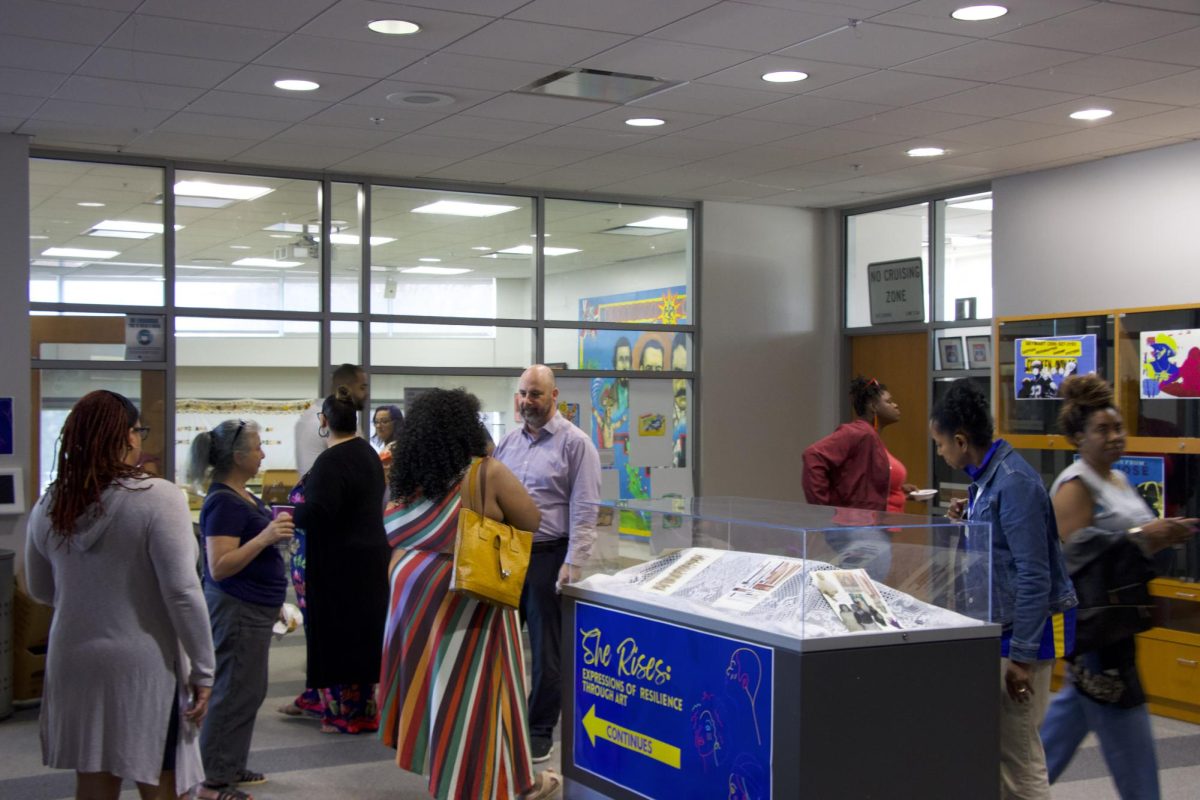
“She Rises: Expressions of Resilience Through Art,” had its closing reception on Thursday at the Dr. Martin Luther King, Jr. Library, celebrating the work of six Black women artists and their experiences with resilience.
Spanning the right corner of the fifth floor, the exhibit was organized by the King Library’s Africana, Asian American, Chicano and Native American Studies Center and SJSU’s Black Faculty and Staff Association.
The closing reception featured five of the six artists, all of which spoke.
Guests could walk around and view collections from each artist, watch videos of performances, read poems and admire sculptures.
Each artist spoke about the meaning behind their work and the importance of the exhibit.
Estella Inda, a research services and social sciences librarian and organizer of the event, said she loves to curate and provide a place where Black women would be honored for their voice.
“Especially in Black History Month, Women’s History Month, especially in the times that we are now, where some voices are being censored,” Inda said.
The exhibit highlighted voices in different ways, from digital art to dance.
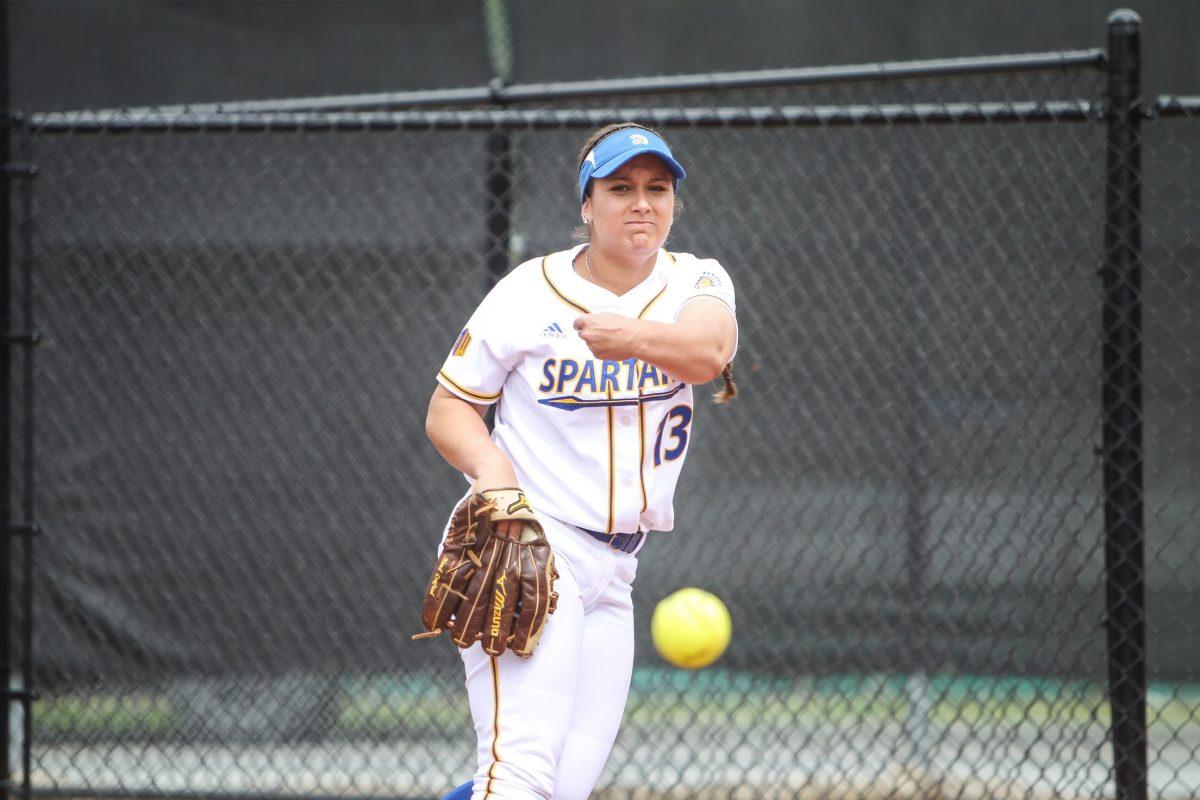
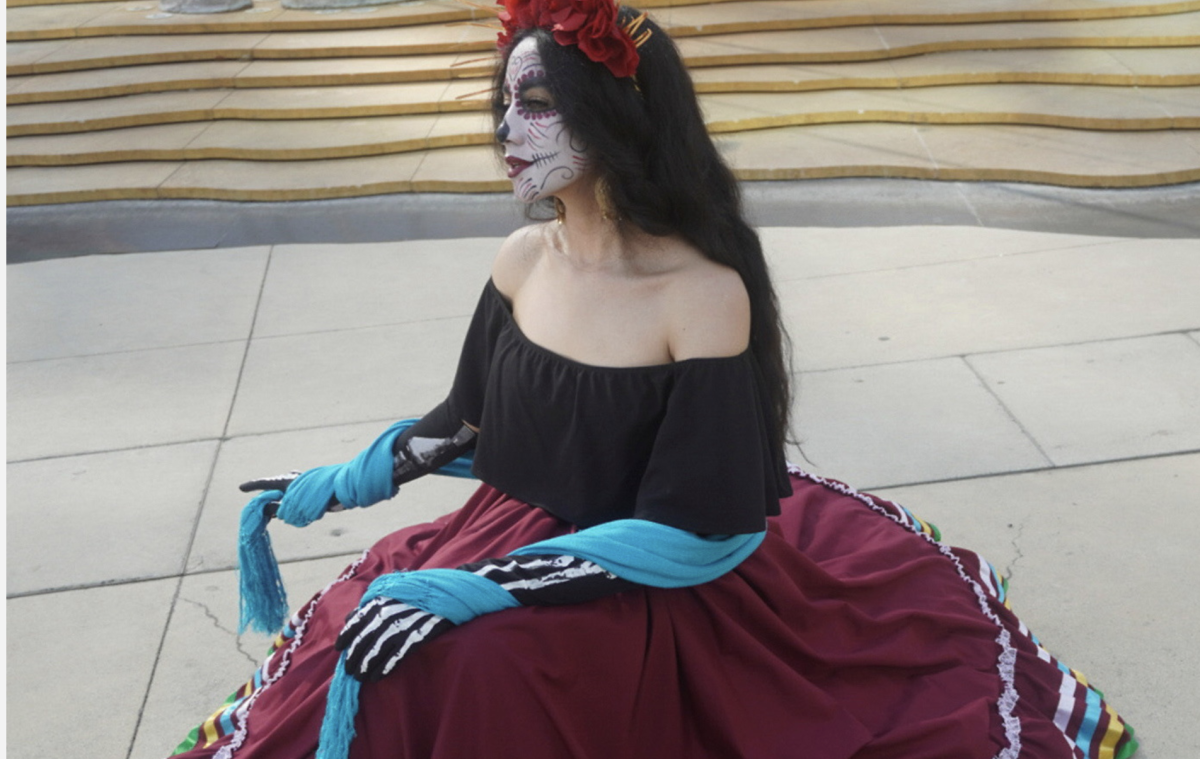
Shamika Wallace, a dance performer, had a display case featuring costumes she performed in alongside photos.
“It means a lot because it’s reconnecting with my youth,” Wallace said. “I think being a woman, one, being a Black woman, two, and growing up here in the Bay Area and dancing, I didn’t see a ton of people that looked like me.”
Wallace said she was told that she didn’t have the body of a ballerina and was passed over for main roles repeatedly, but stayed true to herself and kept dancing.
“So when I saw the word ‘resilient,’ it kind of resonated,” Wallace said.
Tachiya Bryant, a local multi-media artist, said, “Resilience is refusal to accept ‘no.’”
“I think resilience is the ability to get back up even when society keeps telling you no, deciding that you’re gonna do it anyways and you’re going to get what you need and what you want out of this world,” Bryant said.
Bryant said being in the King Library Exhibit scared her. The library exhibit was different from other events, where people usually rush through.
“If you come to a library, you’ve come to spend time,” Bryant said. “So I think it made me a little bit nervous.”
Bryant had the largest portion of the exhibit. One of her pieces displayed face masks woven from braided hair, symbolizing how Black identity through hair has a history of being stifled in professional environments.
Bryant said that her family gives her examples of resilience every day.
“They’re living definitions of what it means to be resilient,” Bryant said.
Many artists featured in the exhibit had artwork inspired by their families.
Nailah Cherie, an SJSU employee, grad student and artist featured, had portraits of her family members displayed.
Between balancing her job in African American studies at the library and her graduate program in human factors, ergonomics and user experience, it has been years since she has created art.
“It’s nice getting to see my art on this platform ’cause normally, I just post it online,” Cherie said. “Especially since it’s all Black women artists, which I haven’t really heard of before.”
Cherie’s art expressed her Mexican and Black identities as well as who she is outside of school.
Cherie’s multi-media pieces utilized items like old earrings to make collages and scrapbook pages.
Other mediums including photography and painting allow her to simplify what Mexican and Black culture means to her.
“I feel like I make art for my family, and I think that’s kind of the best representation,” Cherie said.
Rochelle Rabouin, a multi-genre musician and storyteller, echoed the same sentiment by performing a poem about her great grandmother, grandmother, auntie and mother.
“It’s not about me, It’s about who came before me,” Rabouin said. “They influenced how I turned out and how I have been able to share my gifts with other up-and-coming women, mostly women of color.”
Rabouin said events like “She Rises” that showcase women of color is something that needs to be done all the time.
“We’re the ones that hold up the world with our hands and our shoulders and our heads,” Rabouin said. “It is important for young girls to know that they can go far beyond what they are, and far beyond what they think they might be and events like this show it.”