





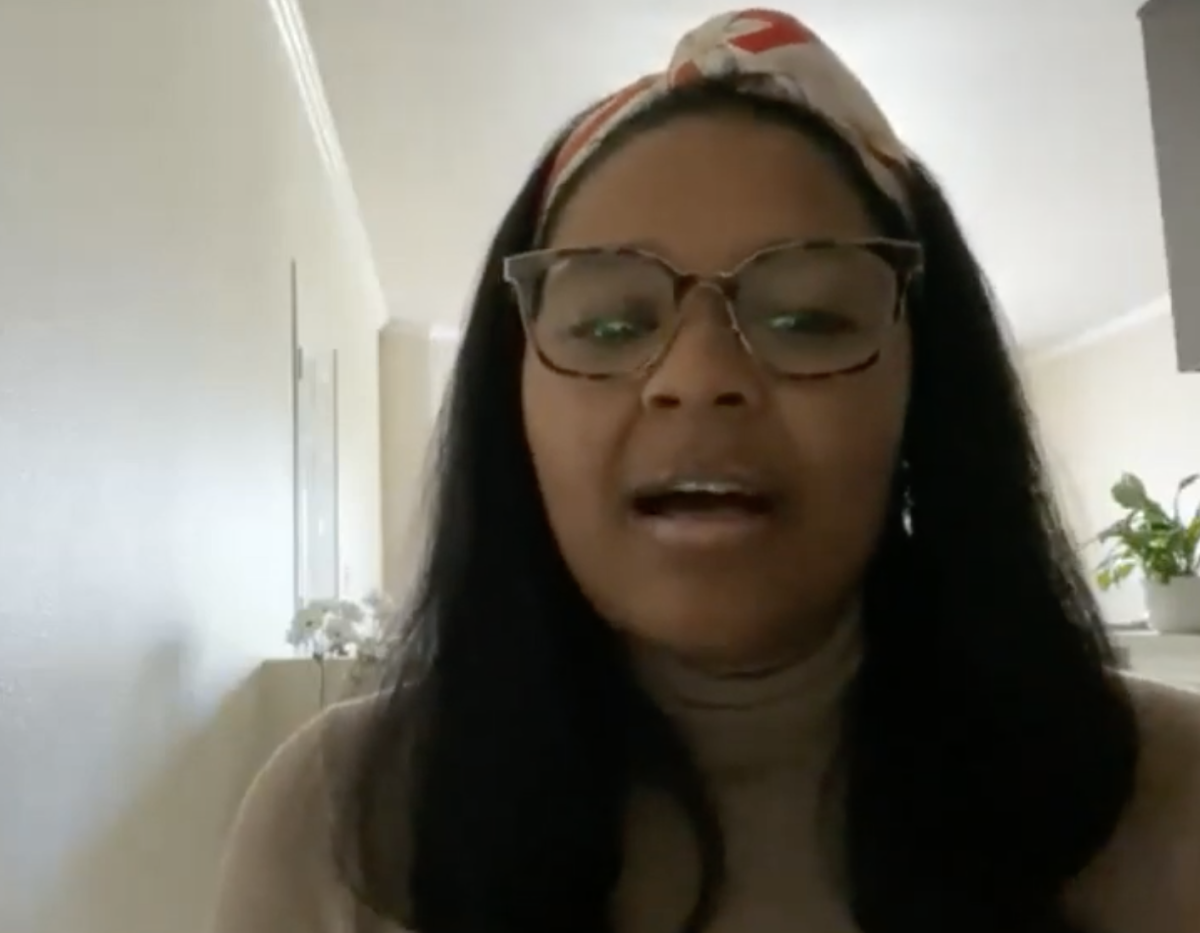
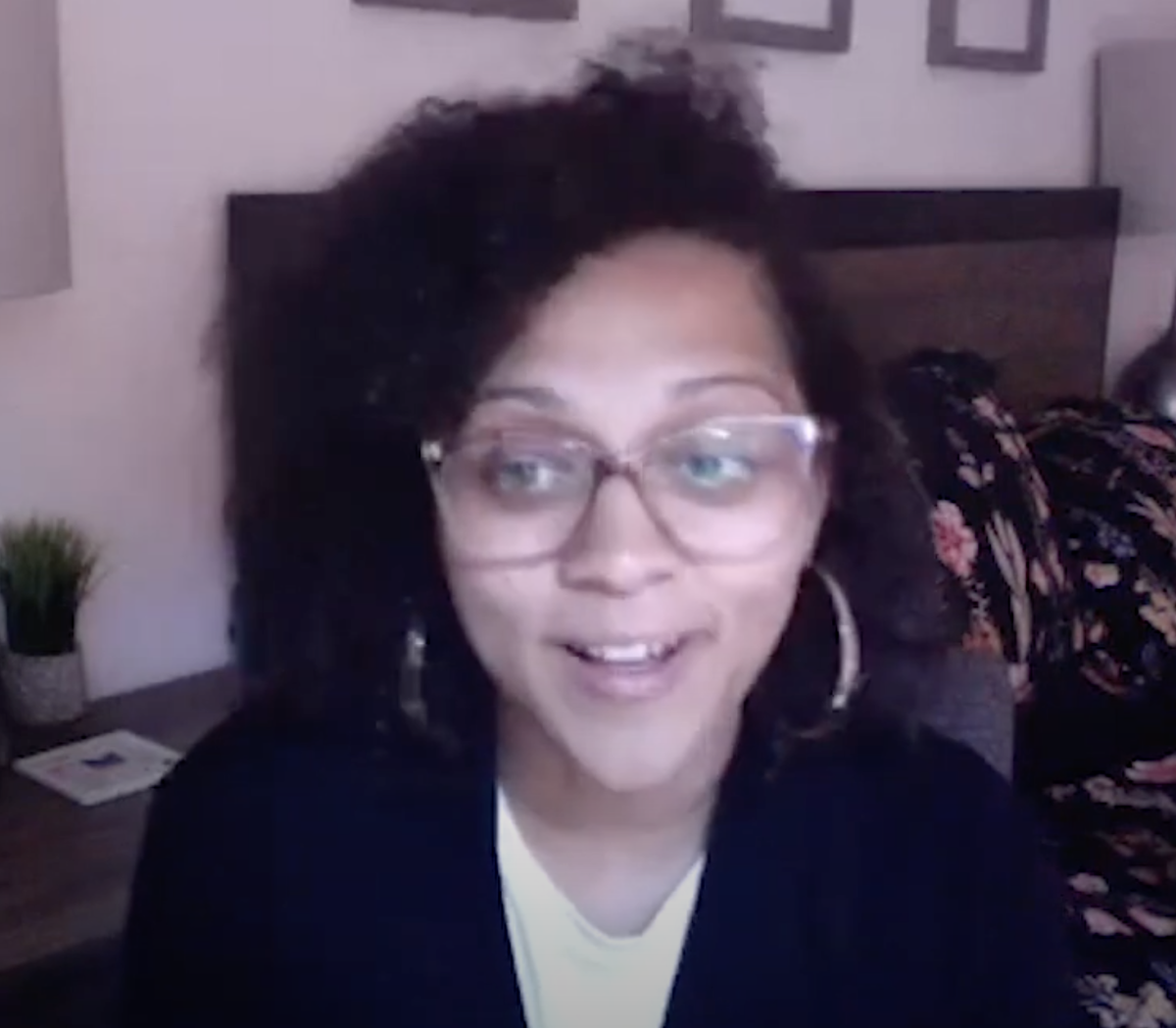


Gloria Arellano-Gomez, a member of the Muwekma Ohlone Tribe, visited San José State’s Native American Indigenous Student Success Center (NAISSC) on Wednesday to discuss the tribe’s efforts to preserve its indigenous heritage and regain federal recognition.
Arellano-Gomez, a former council member and secretary of the Muwekma Ohlone Tribal Council, served on the Muwekma Ohlone Tribe Language Committee, where she worked to revitalize the tribe’s native Chochenyo language.
The Muwekma Ohlone Tribe is aboriginal to the San Francisco Bay Area, including San Francisco, San Mateo, most of Santa Clara, Alameda, Contra Costa and portions of Napa, Santa Cruz, Solano and San Joaquin counties, according to the Muwekma Ohlone Tribe’s website.
Arellano-Gomez said she felt a responsibility not only to educate people about the history of the land they live on, but to remind them of the Ohlones’ continued existence.
“We are still here. We’ve never left,” Arellano-Gomez said. “We don’t like to be talked about in the past tense. We still hold with us that great sense of pride, of our culture, of our language. And although so much was stripped from us and we still deal with historical trauma … we are still thriving.”
When Spanish missionaries arrived in California in the late 18th century, they sought to convert Native Americans to Christianity and inure them to a European way of life, according to the Library of Congress.
“Our people were enslaved,” Arellano-Gomez said. “They were forced to cut their hair, to change the way they eat, to not speak their language and not practice their traditions. So there is a great amount of pain.”
Missionaries subjected Ohlones to violence and strict schedules of involuntary labor while prohibiting them from practicing many of their traditional customs, according to the Santa Clara University Ohlone Heritage Lab.
To Arellano-Gomez, whose first language is Spanish on account of her maternal Mexican heritage, speaking in one’s native language is “an experience that you feel, not in your mind, but in your soul.”
“It’s a gift that was given to me by my ancestors and that I’m paying forward,” Arellano-Gomez said. “It’ll stop you in your tracks – when I’m singing a song or I’m thinking or reading (in Chochenyo) … it really brings me back to who I am.”
She said being fluent in Spanish came in handy when learning Chochenyo.
“We are very particular about how we pronounce (words),” Arellano-Gomez said. “We have glottal stops, we have the tilde, we have different accents that can really change a word – and I know that because I know Spanish.”
In addition to preserving the old, the tribe is also embracing the new.
Arellano-Gomez’s daughter collaborated with the Human-Computer Interaction Lab at Santa Clara University to create an augmented reality tour that allows visitors to scan a QR code and see the names of Ohlones buried under the campus projected onto the sky.
She said her daughter, who is a student at SCU, had felt uncomfortable passing the Mission Santa Clara de Asís on her way to school every day.
“Now, when she passes the mission, it’s not such an uncomfortable, awkward experience,” Arellano-Gomez said. “She was able to use all of her experience and knowledge … to support these projects that are happening on campus because of the university wanting to be proactive and have the Muwekma Ohlone voice be more prevalent there.”
With her ancestral homeland having transformed into a global center for high technology – Silicon Valley, as it’s now called – Arellano-Gomez said the tribe has been learning to embrace change.
“You have to constantly evolve, you have to collaborate,” she said. “And I think living where we live, if we don’t take advantage of those opportunities, people aren’t going to be interested.”
Abel Gomez, an assistant professor in the Native American and Indigenous Studies program at SJSU, invited students from his Intro to Native American and Indigenous Studies class to attend the event.
He said he hoped hearing from Arellano-Gomez would help students see Ohlone people as members of the broader Bay Area community.
“One goal is to have them see Ohlone people … as living, as thriving, not simply as artifacts, not simply as a note in a history book, but as contemporary people that continue to do the work of caring for their land, their community, their culture,” Gomez said. “And that they can humanize, on a really basic level, the indigenous people of this territory.”
Joshua Estrada, a first-year animation and digital art student, said he attended “because of protocol,” but ended up enjoying what he learned.
“One of my highlights (was) hearing how the Chochenyo language has been brought back into modern times,” Estrada said. “I also thought the speaker’s personal story was very impactful in (describing) how the Spanish language can help people be able to change and adapt to new things.”