













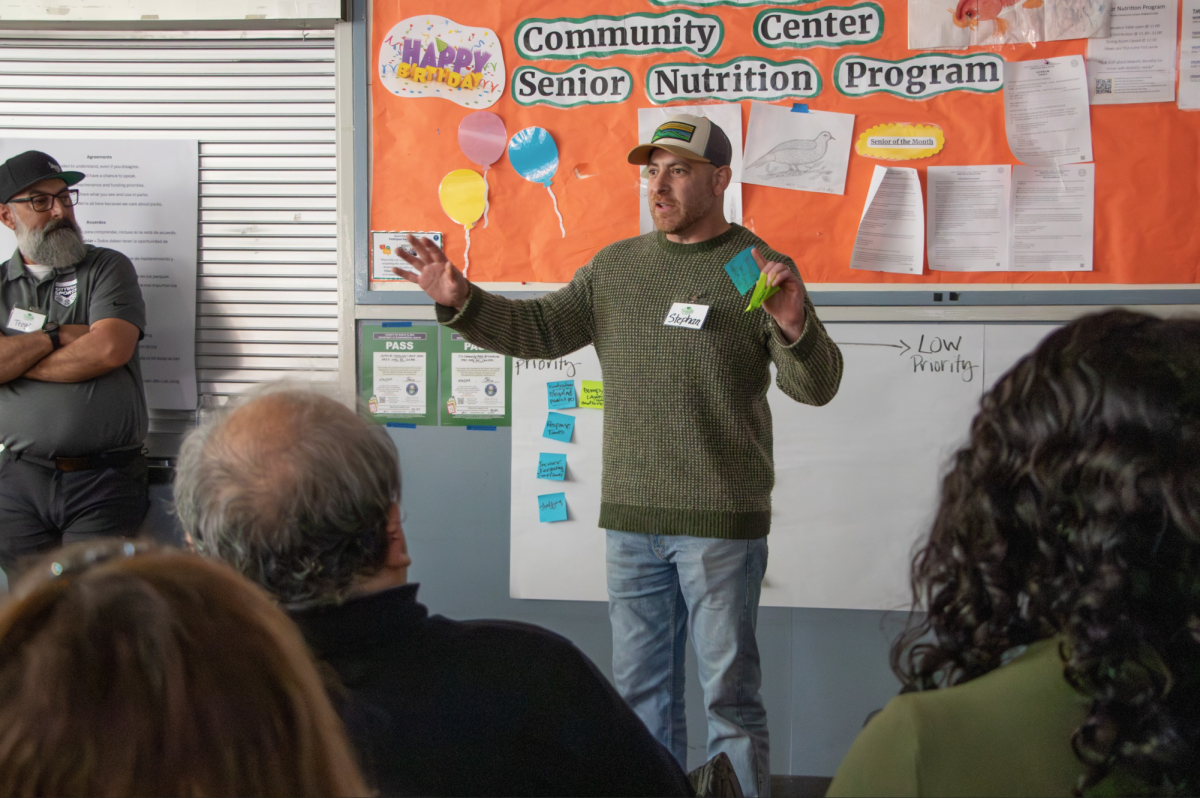
More than a hundred San José residents and neighborhood leaders gathered to discuss the state of the city’s parks at the Southside Community Center early Saturday morning.
The City of San José’s Parks, Recreation & Neighborhood Services Department (PRNS) organized the forum to hear from residents, answer questions and collectively shape how the department takes care of its parks.
Breaking out into small groups, residents discussed their concerns, which ranged from lighting issues and timely enforcement of illegal acts to bumpy lawns and dog poop bags. Parks managers helped facilitate discussions and arrange issues in order of highest to lowest priority.
Amanda Rodriguez, public information manager for PRNS, said parks make people’s lives better.
“Parks are special places in our neighborhood – it’s where birthday parties happen, it’s where we take family photos … my first kiss was in a San José park,” Rodriguez said. “And we want to make sure we’re investing our resources, both current and future, the way you want to see them invested.”
The PRNS department manages more than 200 neighborhood parks, 10 regional parks and 65 miles of trail, according to a GovHR USA document.
Rodriguez said after decades of budget cuts and staff shortages, the department has been struggling to take adequate care of its parks.
Rodriguez said around 180 employees take care of about 1,800 acres of park land, whereas twenty years ago, almost 230 employees took care of nearly 1,500 acres of park land.
The numbers reflect about a 20% drop in the people maintaining parks and about a 20% increase in the amount of park space needing maintenance.
Adrian Mendez, a gardener who maintains parks around downtown San José, said he hopes residents’ advocacy will help the department secure more funding.
“We’re worried about (having) more staff being able to service our parks more frequently,” Mendez said. “I believe a lot of it has to do with funding and even just having the neighborhood advocate for us is a great thing.”
Last month, the department shared several instances of tire tracks causing turf damage to parks in South and East San José on its Instagram page.
Mendez said incidents like this happen regularly and strain the department’s limited resources.
“We have to go over all the ruts and make sure everything’s not a tripping hazard and possibly replanting, resodding seed,” Mendez said. “There’s a lot of stuff that happens outside of our work hours that we come back to the next morning that we have to deal with, but we do what we can.”
Of the 17 largest cities in California, San José ranks 12th in the amount it spends annually on parks and recreation systems, at $125 per capita, according to a Trust for Public Land analysis.
Andrea Flores Shelton, assistant director of PRNS, said the department’s dependence on the city’s general fund, which also funds critical services like police, fire and libraries, makes funding for parks unreliable.
“We’re just not a comprehensive enough system to be as responsive as we’d like to be and to meet community expectations,” Flores Shelton said. “Whether that’s frequent trash pickup in our parks or bringing down vandalism as quickly as possible or people wanting a new playground … systemically, we do not have the type of ongoing funding (to meet those expectations).”
The department is exploring two new revenue generating opportunities that would create dedicated funding for parks, according to a Dec. 23, 2025 Mercury News article.
One option is a one or two cent per square foot parcel tax on residential and commercial properties that Rodriguez said would cost the average San José homeowner $5 to $10 per month.
The other option, conceived in partnership with the Santa Clara County Public Health Department, is a Sugar Sweetened Beverage Tax that would add a two cent per ounce tax to sodas, energy drinks, sugary coffees and boba teas, according to the same Mercury News article.
Rodriguez said the revenue from these sources would go directly into funding park maintenance and scholarships that would allow residents to participate in afterschool programs, summer camps and recreational classes for free or at a discounted rate.
Alie Victorine, a San José resident and president of the Seven Trees Neighborhood Association, said she appreciates both the work of city employees and that of the broader community.
“You see (employees) when you’re out there – they are working their butts off,” Victorine said. “The other thing is, you see the diversity of the people that are here, that care and love their parks and want to make a difference, and how each group didn’t just put (the blame) on the city. They also said, ‘What can we do? How can we volunteer?’ ”
The parks department offers a wide range of volunteer opportunities for residents to help maintain local parks, according to a City of San José webpage.
Flores Shelton said residents’ sometimes-heated discussions at forums like these reflect their passion for parks.
“Even when neighborhoods get frustrated and angry with us, it’s because they love their parks and we just need to remember that,” Flores Shelton said. “We’re all fighting for the same goal, right? Beautiful, safe, clean parks.”
The next neighborhood forum is scheduled to be held 9 a.m. to 11 a.m. on Saturday, March 28, at a location yet to be determined.