



Over a dozen students gathered in the Student Union at San José State to celebrate the role of Asian and Pacific Islander artists in resisting oppression on Thursday.
Marc Sanna, a fourth-year aerospace engineering student and community organizer for The Center for Asian Pacific Islander Student Empowerment, led a presentation about artistic resistance and how it serves as a catalyst for change.
“Sometimes just having a thing exist is part of the resistance because there are systems that don’t want those things to be possible or to be a thing that we are able to enjoy,” Sanna said.
The center provides academic, community-building and empowerment opportunities for Asian and Pacific Islander students, according to its webpage.
Sanna said he defines resistance as the act of going against oppression, injustice and the political status quo.
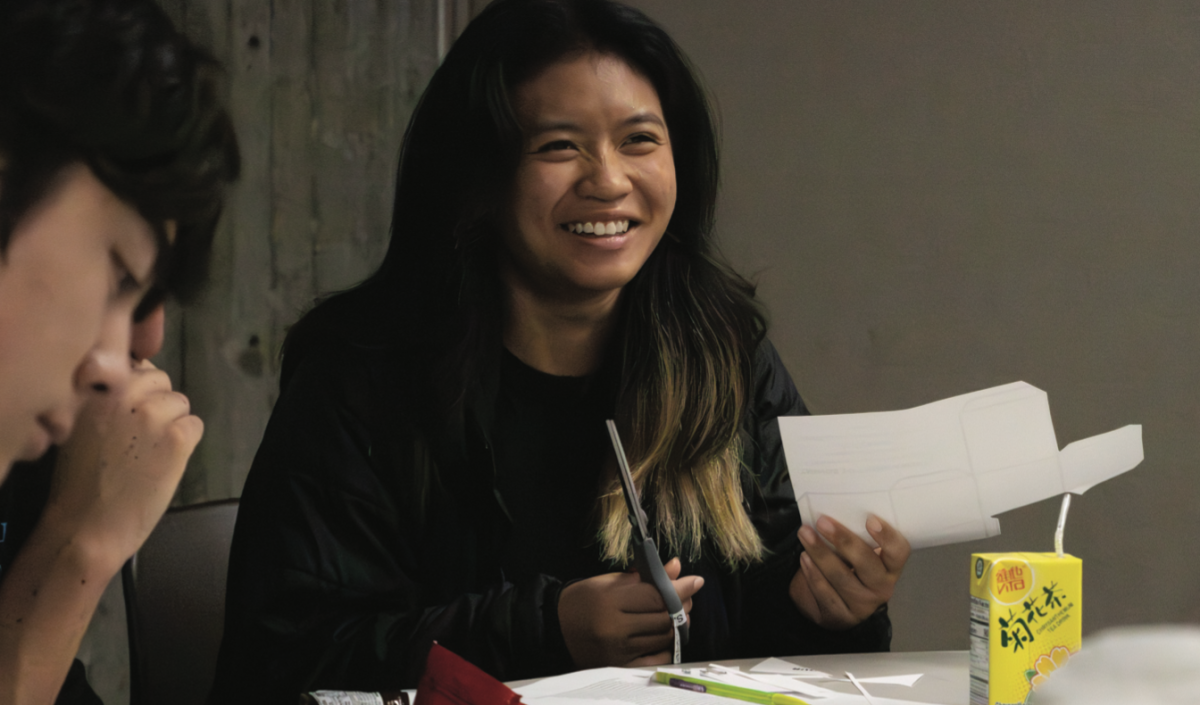
After the presentation, Sanna led attendees in making mini-murals representing untold stories about their cultural identity or issues they wished to speak out on.
Participants cut and assembled cube-shaped murals from card-stock and decorated them with stickers and drawings of family, flags, continents and cultural symbols.
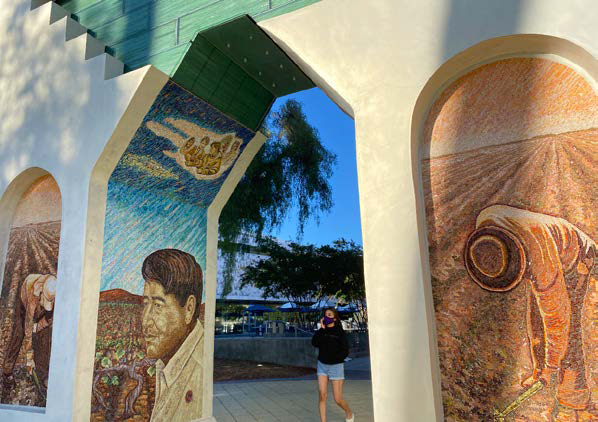
Alan To, a fourth-year software engineering student, said he appreciated learning about the Asian American Community Heroes Mural in Sanna’s presentation.
The mural, located in Chinatown, San Francisco, honors twelve Asian American figures who have played important roles in history, politics and the arts, according to the Chinese Culture Center of San Francisco .
“A really nice takeaway was realizing that there was a mural in San Francisco that actually represented the Wong Kim Ark case, which established birthright citizenship for U.S. citizens,” To said. “I thought that was really nice – to see things from our history classes be ultimately displayed around the communities that we thrive in.”
Ark is one of the figures featured on the mural whose 1898 Supreme Court Case made citizenship possible for anyone born in the United States, according to the Chinese Culture Center of San Francisco.
At the time of Wong’s case, Chinese immigrants were barred from becoming naturalized U.S. citizens under the Chinese Exclusion Act of 1882, according to the National Archives.
He was denied re-entry to the United States after returning from a trip to China because he was the child of Chinese immigrants, according to the Zinn Education Project.
Sanna showed examples of paintings, murals and public installations that have embodied resistance through representation.
He said mural-making was a tactile way for students to interact with art as resistance.
“A lot of strong themes that I pulled out were themes of family and solidarity as a community here,” To said. “Also going over the aspects of media such as music – for me, music definitely was a big part of my life, so really highlighting that in my activity.”
Sanna also guided attendees through protest songs such as “We Are the Children” (1973) by Yellow Pearl and Ruby Ibarra’s NPR Tiny Desk performance of “Bakunawa.”
Sebastian Teves Alvarez, a first-year microbiology student, said he enjoyed listening to Ibarra’s Tiny Desk concert.
“I really liked learning about different forms of protest and resistance through art and all the different visual and auditory mediums,” Alvarez said.
The song was inspired by a dragon in Philippine mythology that swallowed the moon, was banished from the sea and causes earthquakes and eclipses as it attempts to return to the sea, according to a May 13 NPR article.
Ava Douangphachanh, a first-year mechanical engineering student, said she enjoyed the music portion of Sanna’s presentation.
“It made me realize there’s more to art,” Douangphachanh said. “I really loved how (Ibarra) used her voice as a form of resistance.”
Ibarra used the story as a symbol of combating colonial erasure and reclaiming history, according to the same source.