
























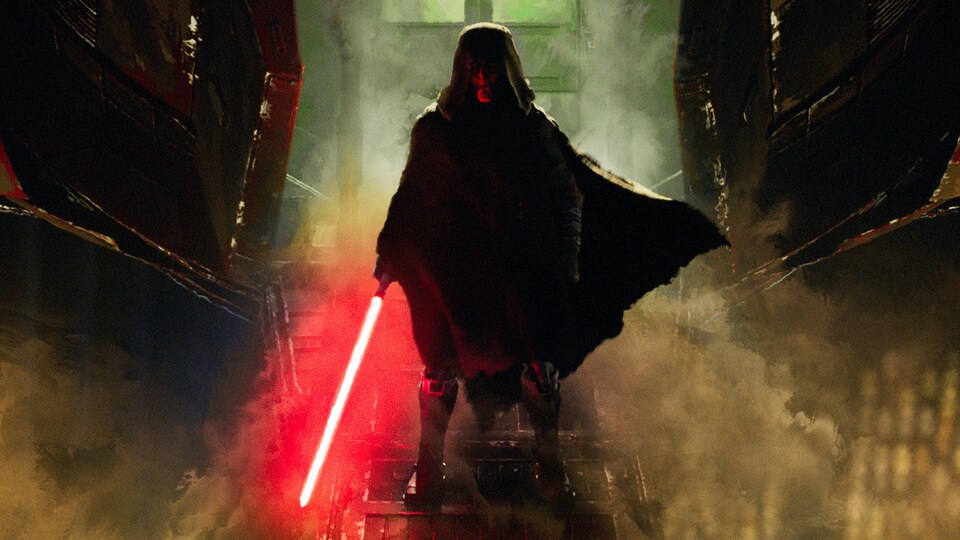
“Star Wars: Maul – Shadow Lord” is Disney’s newest attempt at kickstarting a new series with a fan favorite character, and there is no question that it was successful.
The compelling story is flanked by an amazing score and animation, which has become a staple for animated “Star Wars” projects.
Lightsaber duels between different sets of Force wielders are absolutely dazzling, with animation that shows the true skills of both the light and dark side Force wielders.
The story introduces Maul, a fallen Sith Lord, on the planet Janix. He is on a mission to seek revenge and rebuild his crime syndicate after his previous group, the Shadow Collective, was dethroned during the Siege of Mandalore.
He meets Jedi Master Eeko-Dio Daki, and his young padawan Devon Izara, who are hiding on the streets of Janix after the Great Jedi Purge.
Maul’s relationship with Daki and Devon is a main staple of the show and gives a new perspective on the light and dark sides of the force, which is typically seen in the “Star Wars” universe.
The creators of the show made it digestible for viewers to understand the story, even without a firm grasp on “Star Wars” lore.
It navigates the politics of the underworld early on, giving viewers a chance to understand the plot without much context.
The show follows a secondary storyline with Captain Brander Lawson and his attempts to bring down Maul and other local crime syndicates, while also trying to navigate a complicated relationship with his son Rylee.
After his failure and chagrin of local authorities, the Empire arrives on Janix to impose its will.
Imperial forces put the planet in a chokehold and threaten death on anyone who tries to leave in an attempt to exterminate Maul and any remaining Jedi.
Choosing to make the series animated allowed for amazing action sequences that wouldn’t be possible in a live action setting.
The two storylines eventually intertwine and cultivate into a thrilling finale that leave fans and newcomers fulfilled and desperately wanting more.
Samples of “Duel of the Fates,” “Anakin vs. Obi-Wan” and “The Imperial March” can be heard in multiple episodes, which nod to past films and series accompanying backstories of certain characters.
Every episode includes hidden details embedded into its audiovisual design that make viewers pause the show and rewind to try and experience it again.
The quality is so high that it makes you want to experience the cinematography on a big screen with surround sound and a big bucket of popcorn.
The creators of the show, Dave Filoni and Matt Michnovetz, showed why they are behind some of the most successful pieces of “Star Wars” media.
They have contributed to other animated shows such as “Star Wars: The Clone Wars” and “Star Wars: Rebels” which are two of the highest rated “Star Wars” projects, according to IMDb.
Brad Rau followed his success of “Star Wars: The Bad Batch” as the supervising and executive director of the show.
Sam Witwer’s performance as Maul is as captivating as it is tragic.
Throughout the series, Witwer’s voice acting gave me goosebumps because of his ability to present Maul’s hate and despair through dialogue.
Maul’s character is given incredible depth in each episode, after being best known as a badass revenge-seeking darkside Force wielder.
The only negative is the run time of each episode being under 30 minutes.
This series gives fans both a new and old refreshing injection of what makes “Star Wars” one of the most successful franchises in media history.