




























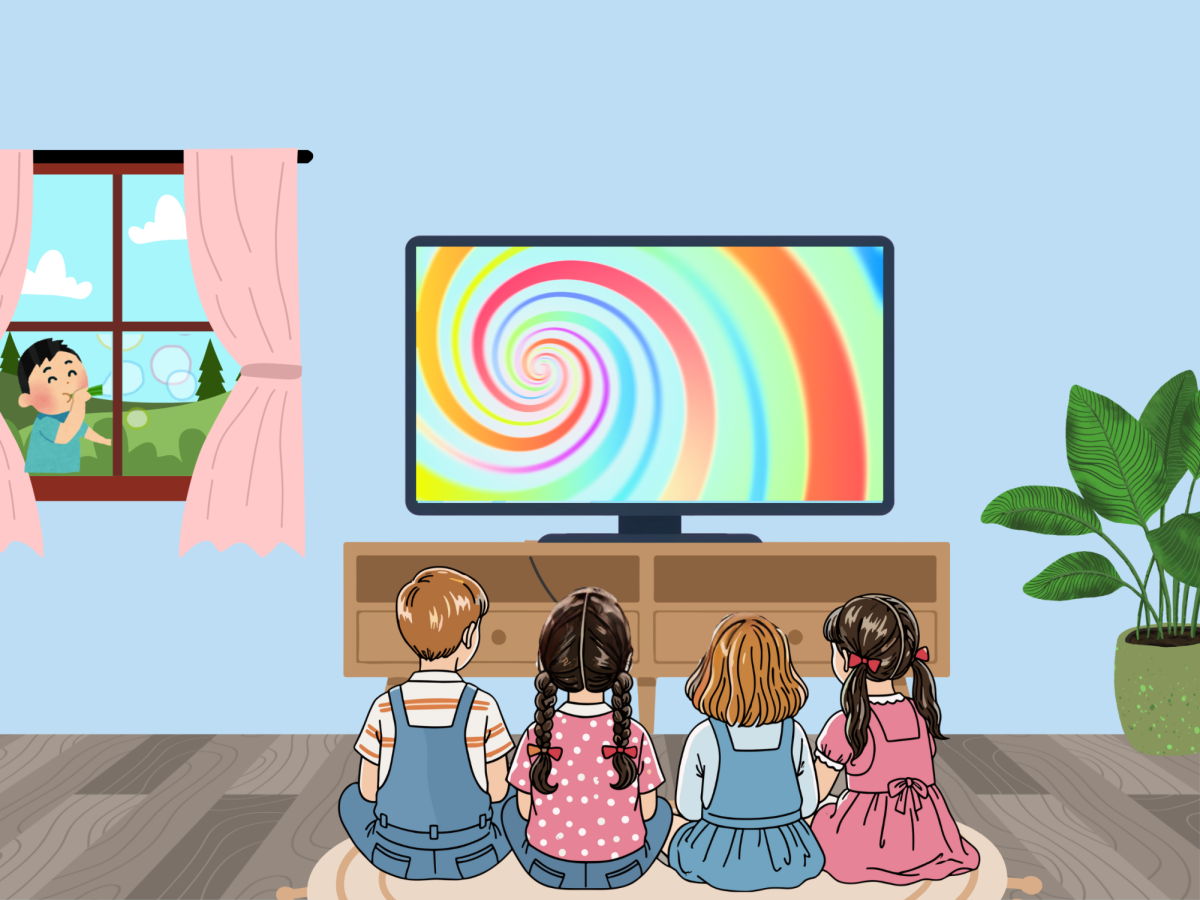
Although technology is unavoidable in modern society, children should be allowed to remain kids for as long as possible.
This means limiting electronics and keeping them off social media until they are older and emotionally ready.
It is becoming increasingly common to see young children scrolling on tablets before they can even spell their own names.
Screen usage now begins at very early ages, nearly 40% of children have their own tablet by age two according to Common Sense Media. Exposure this early on means many children are engaging with digital content before they can develop basic literacy skills.
As someone who previously worked as an after-school teacher, I have seen the effects of early and unrestricted screen exposure firsthand.
Children would regularly repeat crazy lines or reenacted scenes from shows that were clearly not age appropriate, often without understanding what they were saying or doing.
These moments were alarming because they showed how easily adult content seeps into children’s lives through screens.
Mental health organizations, like The Kids Mental Health Foundation, have raised concerns that social platforms encourage comparison, validation-seeking and exposure to unrealistic standards before children have a stable sense of self, according to The Kids Mental Health Foundation, Kids and Social Media.
Platforms such as Instagram, Tiktok, and Youtube have been linked to higher levels of depressive symptoms in adolescents, though these effects vary depending on individual factors such as gender, personality and prior negative reactions to social media, according to a Dec. 2023 PubMed analysis.
Pressure from social media imagery can negatively affect confidence and emotional well-being.
Even adults struggle to navigate social media in healthy ways, making it unreasonable to expect children to manage these environments responsibly.
A large majority of studies examining adult users have found that higher amounts of time spent online are associated with higher levels of depressive symptoms and feelings of loneliness, indicating that social media impacts mental health even beyond children or teens, according to a Dec. 2023 PubMed study.
Even at my age, it is easy to forget that what people post online is not real life. Most users only share edited happy moments, while hiding the struggles, dress and imperfections behind a screen.
Introducing kids to online judgment too early can interfere with identity development and emotional growth.
What could be a childhood filled with imagination, outdoor play and face-to-face interactions has been replaced by screens and social platforms designed for adults.
Childhood is a critical stage of development and is when kids learn how to communicate, regulate their emotions and get to build their creativity through play, according to an Aug. 2024 Children’s Hospital of Orange County article.
When screens dominate a child’s daily life, those opportunities are stripped and often replaced with passive consumption.
Passive consumption refers to media usage that involves watching, listening or scrolling without interacting, creating or actively engaging with the content.
Instead of learning through real-world experiences, children are absorbing content that does little to support emotional or social growth.
Despite the large amount of negative impact social media has, not all screen time is harmful.
Quality programs directed for children is better than channels that attempt to sell products to younger minds, according to the Mayo Clinic Health System.
Educational content, creative tools and screen time shared with caregivers can support learning when used intentionally, according to JAMA Pediatrics.
Platforms such as Khan Academy, ABCmouse and Duolingo ABC provide age-appropriate lessons that help kids build skills in reading, math and language through interactive practice and feedback.
However, unrestricted access, endless scrolling and early exposure to social media create environments children are not developmentally ready to handle.
Parents should follow established pediatric guidelines when managing children’s screen use, such as discouraging media for children under age 2 and limiting older children to no more than an hour or two of recreational screen time per day, according to Mayo Clinic Health System.
Ultimately, it is the responsibility of adults, parents, educators and caregivers to protect childhood innocence.
Childhood is temporary and once it is lost, it cannot be recovered.
Allowing kids to be present in the real world before immersing them in the digital once is one of the most important decisions we can make in shaping their future.
